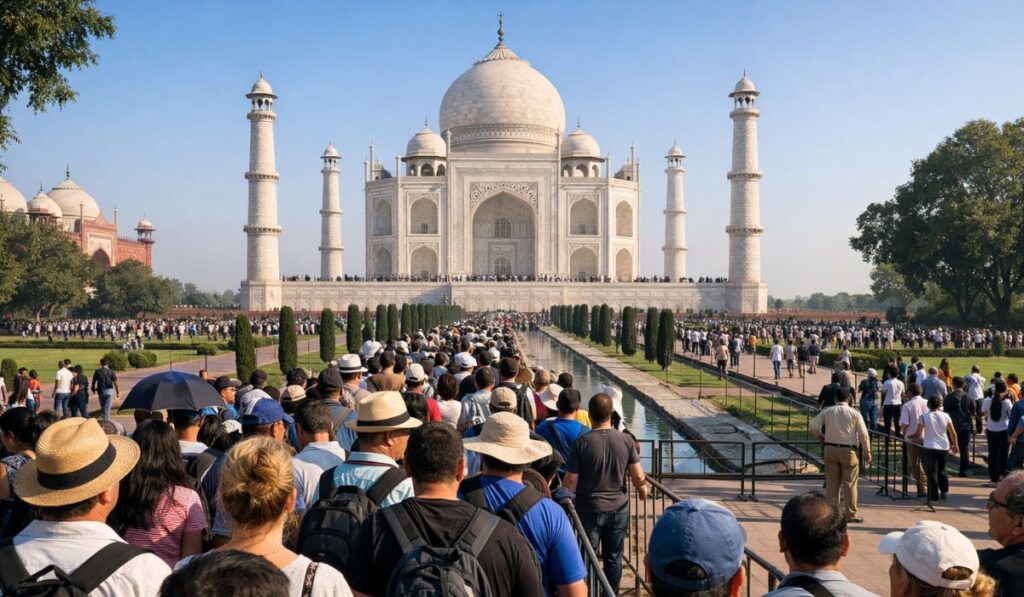
Last updated based on current Taj Mahal visitor logistics and ASI guidelines. 

Delhi to Agra by private car is one of the fastest, easiest, and most flexible ways to visit the Taj Mahal — especially for travelers planning a same-day or sunrise trip.. Agra is home to one of the Seven Wonders of the World, and the journey from the capital is more accessible than most visitors expect. Whether you are a first-time traveler to India, a couple seeking a romantic sunrise experience, or a family looking for a comfortable, flexible day trip, traveling by private car gives you the freedom to do it on your terms.

This guide covers everything: the route, the drive, official Taj Mahal rules, ticketing, gate logistics, seasonal advice, scam warnings, and a sample same-day itinerary. It is written to help you plan with confidence — not just book a tour.

Quick Answer: Delhi to Agra by Private Car at a Glance

Delhi to Agra by private car covers approximately 230–240 km via the Yamuna Expressway and usually takes around 3–4 hours under normal traffic conditions. For the best Taj Mahal experience — especially sunrise — most travelers should leave Delhi between 4:30 and 5:30 AM. The Taj Mahal is closed every Friday, and the East Gate is typically the best entry point for sunrise visits.

Key Facts:

  • Distance: 230–240 km
  • Drive Time: 3–4 hours
  • Best Route: Yamuna Expressway
  • Ideal Departure: 4:30–5:30 AM
  • Best Taj Entry: East Gate
  • Taj Mahal Closed: Friday

How Far Is Delhi from Agra, and How Long Does It Take?
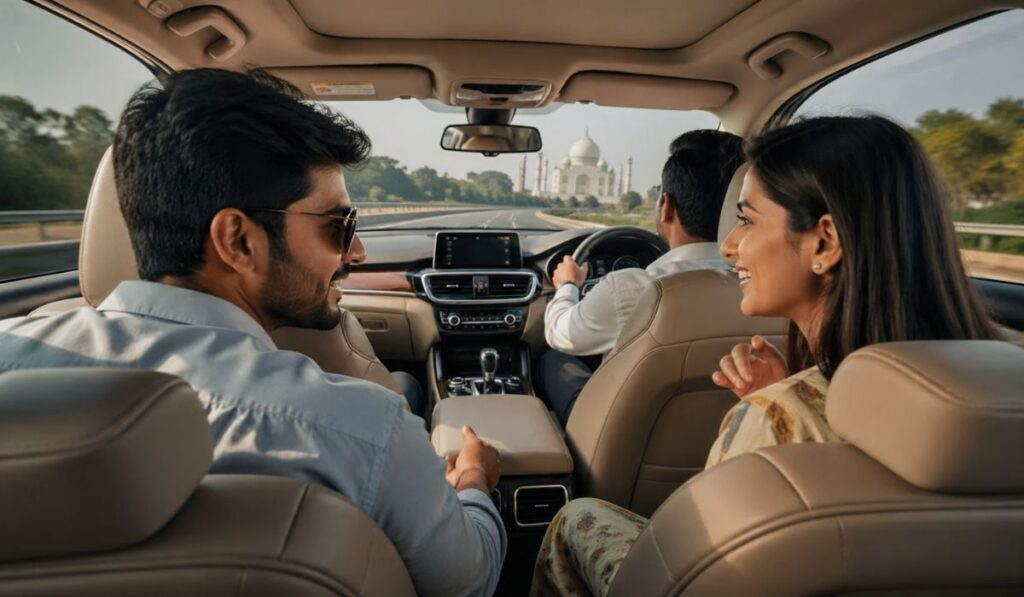
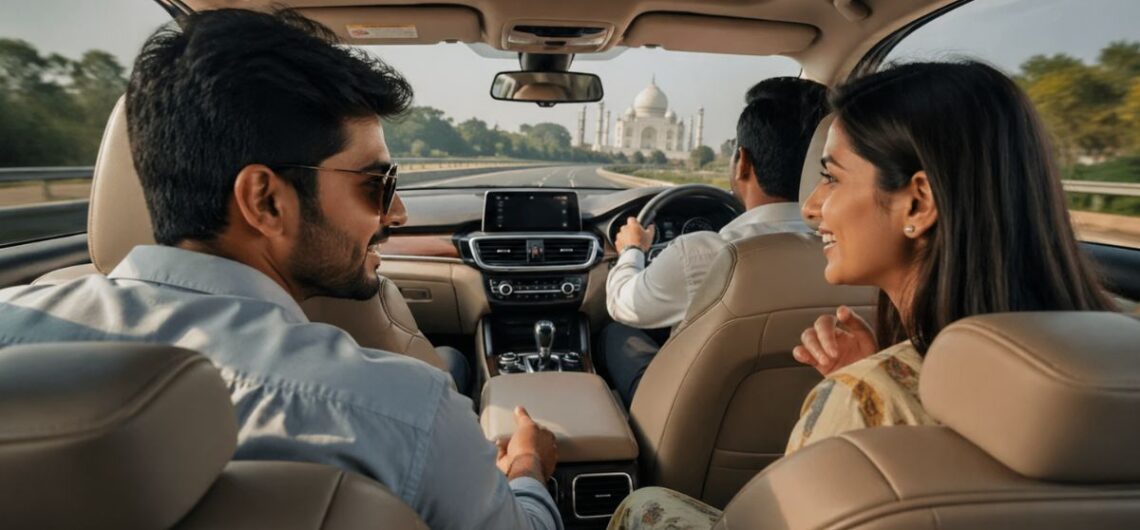
Delhi to Agra by Private Car: Route, Tips & Taj Guide

The distance from Delhi to Agra is approximately 230 to 240 kilometres, depending on your starting point in the city. Via the Yamuna Expressway — a smooth, well-maintained six-lane toll highway — the drive typically takes between 3 and 4 hours under normal traffic and road conditions.

The Yamuna Expressway is the preferred route for most private car trips. It is far faster and more predictable than the older NH-19 (Grand Trunk Road) option, and it offers a comparatively relaxed drive through relatively flat terrain. Tolls apply and are usually a minor cost included in most tour packages.

For travelers aiming to reach Agra in time for sunrise at the Taj Mahal, a departure from Delhi around 4:30 to 5:30 AM is strongly recommended. This window accounts for early-morning traffic clearance out of Delhi and gives you enough time to reach the East Gate before or shortly after the monument opens.

For travelers who prefer fixed pricing, sunrise timing, and door-to-door convenience, booking a private Delhi–Agra car tour can simplify logistics significantly.

Why Choose a Private Car for the Delhi to Agra Journey?

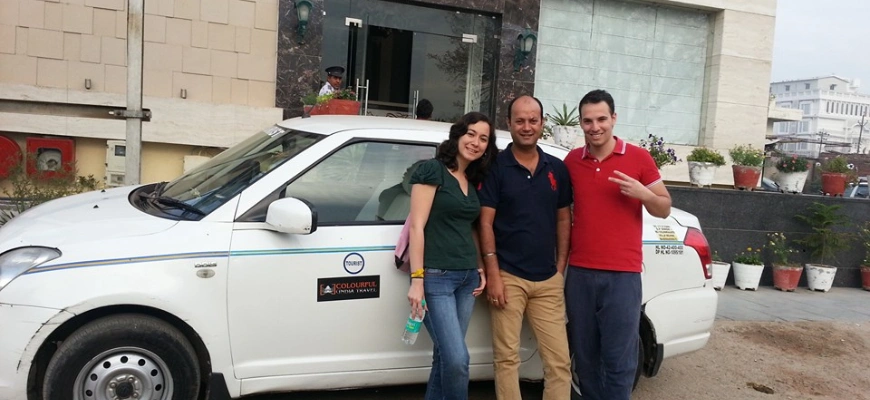
There are several ways to travel from Delhi to Agra — trains, buses, taxis, and guided tours among them. Private trip in Car in India remains the most flexible and comfortable option, particularly for international visitors who are unfamiliar with India’s rail booking systems or who have specific timing needs.

The core advantages are practical. You are picked up directly from your hotel or accommodation, at the exact time you choose. There are no fixed departure platforms to navigate, no shared passenger arrangements, and no dependency on public transport schedules. Your driver waits for you at Agra while you explore, and you return when you are ready — not when a tour bus leaves.

For families with young children or elderly members, this comfort becomes especially important. The journey is long enough that rest stops, refreshments, and flexibility matter. A reliable private car with air conditioning allows you to manage your day without friction.

For couples doing a sunrise visit, an early 4:30 AM departure means no scrambling for taxis or risking a late arrival. The driver handles the route; you focus on the experience.

Private cars also allow easy multi-stop itineraries. Agra Fort, Mehtab Bagh, and local lunch stops can all be woven into your day without rigid time blocks. That level of control is simply not available on shared or group transport.

The Archaeological Survey of India (ASI): Who Manages the Taj Mahal?

Before discussing ticketing, gates, or visitor rules, it is worth understanding who oversees the Taj Mahal and why that matters for your visit.

The Archaeological Survey of India, commonly referred to as the ASI, is the primary government body responsible for the maintenance, preservation, and regulation of India’s protected monuments. Established under the Ministry of Culture, ASI manages over 3,600 centrally protected monuments across the country, including the Taj Mahal, Agra Fort, Fatehpur Sikri, and dozens of other UNESCO World Heritage Sites.

At the Taj Mahal, ASI governs everything from opening and closing times to ticketing systems, visitor rules, conservation protocols, and permitted guide licensing. All official ticketing — both online and at the gates — falls under ASI’s ticketing infrastructure. Official guides operating at the monument are required to hold ASI-recognized credentials.

Understanding this matters because it is the foundation of all the rules you need to follow — and the benchmark for identifying scams, which we will address in detail later in this guide.

Official Taj Mahal Timings and Visitor Rules

Opening and Closing Hours

The Taj Mahal opens 30 minutes before sunrise and closes 30 minutes before sunset, seven days a week — except Fridays, when the monument is closed to general visitors. The exact opening time therefore changes seasonally. In summer months, the monument may open as early as 5:30 AM, while winter openings fall closer to 6:30 to 7:00 AM.

It is essential to check the current sunrise time for your specific travel date and plan your departure from Delhi accordingly. A 30-minute buffer before sunrise is the official open window, and early arrival at the East Gate is strongly advised for sunrise visits.

Friday Closure

The Taj Mahal is closed every Friday for general sightseeing visitors. This is a longstanding rule under ASI’s management framework. The monument remains open on Fridays for Muslim worshippers attending prayers at the mosque within the complex, but tourist access is not permitted on this day.

If your travel dates fall on or around a Friday, it is critical to plan your visit for Thursday or Saturday instead. This is one of the most commonly overlooked planning errors among first-time visitors, and it cannot be remedied on the day.

Tickets: Online and At-the-Gate

Tickets for the Taj Mahal are available both online through the official ASI-affiliated ticketing portal and at the ticket counters at the East Gate, West Gate, and South Gate. Online booking is strongly recommended, especially for sunrise visits, to avoid queues and ensure entry within the limited early morning window.

The standard entry ticket covers access to the main complex and gardens. There is an additional, separate ticket required to enter the main mausoleum — the white marble structure itself where the cenotaphs of Shah Jahan and Mumtaz Mahal are located. This additional mausoleum ticket is often a surprise for visitors who assume the gate ticket covers everything. It does not. If entering the inner chamber is important to you — and for most visitors, it is — purchase this additional ticket when you buy your entry pass.

Children under 15 years of age are admitted free of charge. Valid photo identification is required for all adults, and foreign nationals are typically asked to present their passport. Keep your ID accessible throughout the visit.

Night viewing of the Taj Mahal is available on the night of the full moon and the two nights immediately before and after it. This is a separate ticketed experience, requires advance booking through official channels, and has its own set of restrictions. Viewing during the night session is conducted from a designated area rather than from within the inner gardens, and the experience is managed by ASI with strict visitor number caps.

East Gate vs. West Gate: Which Should You Use?

The question of which gate to use is one of the most practical and frequently asked by first-time visitors.

The East Gate is the most popular entry point for early morning and sunrise visitors. It tends to have smoother queue management in the early hours and is the gate most tour operators default to for dawn arrivals. The approach road from the East Gate side also has better parking infrastructure for private vehicles.

The West Gate is generally preferred by visitors coming from central Agra city, arriving mid-morning or later. It can be busier during peak hours, particularly on weekends and holidays.

The South Gate is a secondary entry point that sees lighter traffic but is less commonly used by tourists coming from Delhi.

For a same-day Delhi trip focused on sunrise, the East Gate is the recommended choice. Your driver should be familiar with the approach roads, designated vehicle drop-off zones, and the required walking distance or battery bus transfer to the gate itself. Discuss this with your driver or tour operator in advance.

Vehicle Access and the Taj Mahal Parking Zone

This is an important logistical point that many guides omit: private cars — including tourist vehicles — cannot drive directly to the Taj Mahal gates. India’s Supreme Court-mandated pollution control measures restrict the movement of petrol and diesel vehicles within a defined zone around the monument. This zone is known as the Taj Trapezium Zone (TTZ).

In practical terms, this means your private car will drop you at a designated parking area or vehicle-free zone some distance from the gate. From there, you will either walk (typically 5 to 15 minutes depending on the entry gate) or take one of the available eco-friendly transport options: battery-powered buses or horse-drawn carriages (tongas), both of which operate as short transfers to the gate entrance.

This transfer is a normal part of visiting the Taj Mahal and should not be treated as an inconvenience or a scam. Your driver will be familiar with where to drop you. The transfer options are official and regulated.

Footwear and Dress Code at the Taj Mahal
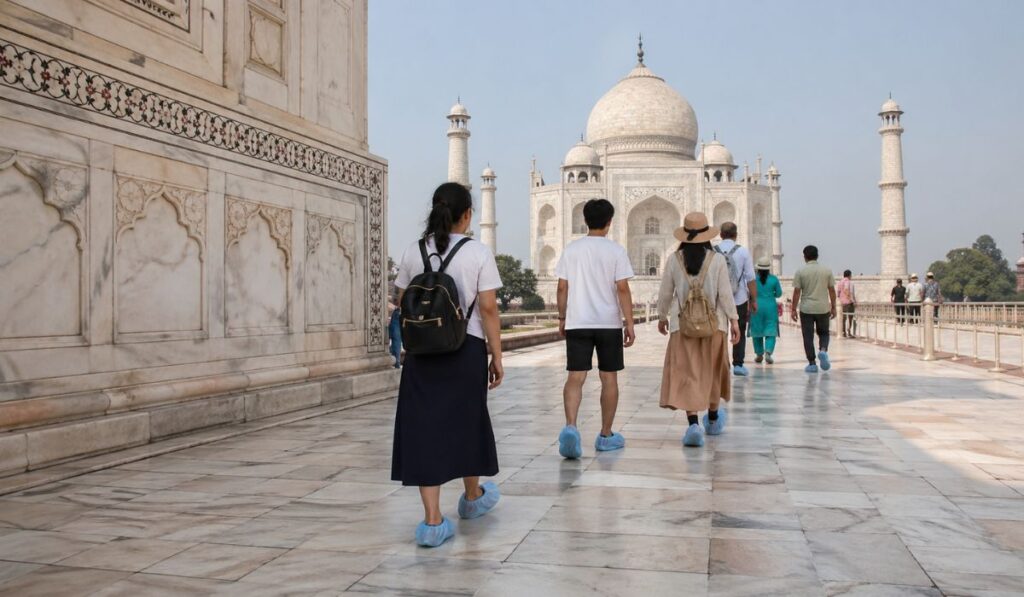
Delhi to Agra by Private Car: Route, Tips & Taj Guide

The inner marble platform surrounding the main mausoleum is a protected and sacred area. Visitors are required to remove their shoes before stepping onto this platform, or alternatively wear the shoe covers (soft overshoes) that are provided free of charge at the entrance to the plinth.

In summer, this marble can become extremely hot underfoot by mid-morning. If you are visiting after 9 or 10 AM between April and June, walking barefoot on the marble can be genuinely uncomfortable. Bringing a pair of thick socks is one of the most practical pieces of advice for warm-season visitors. The shoe covers provided do offer some insulation, but socks add meaningful protection.

There is no formal dress code requirement for the Taj Mahal, but modest dress is always respectful given the religious significance of the site. Shorts and sleeveless tops are accepted, though covering shoulders when entering the mosque area is advisable.

Summer, Winter, and Seasonal Advice

Summer (April to June)

Indian summers in Agra are intense. Temperatures can reach 40 to 45 degrees Celsius by late morning, and the marble reflects and radiates heat considerably. A sunrise visit is not merely a romantic suggestion during these months — it is genuinely the only comfortable window to experience the monument fully. By 9 or 10 AM, the heat can make extended outdoor time exhausting.

Bring adequate water, high-SPF sunscreen, a hat or scarf, and sunglasses. Stay hydrated from the moment you depart Delhi.

Monsoon (July to September)

The monsoon brings occasional cloud and dramatic skies that can produce extraordinary photographs, but also intermittent heavy rain. Crowds are lower during this period, and the gardens are lush. Carry a light rain jacket or compact umbrella.

Winter (October to February)

Winter is peak tourist season in Agra and arguably the most pleasant time to visit. Temperatures are cool and manageable. However, dense fog is a common occurrence in December and January, particularly in the early morning hours. Yamuna Expressway driving can become hazardous in heavy fog, and fog can also obscure the monument itself during sunrise visits.

If you are traveling in foggy winter months, discuss the departure time with your driver and be flexible about when you arrive at the monument. A mid-morning visit on a clear winter day can be just as stunning as a foggy sunrise attempt. Monitor forecasts the evening before and plan accordingly.

Agra Fort: The Essential Add-On

No trip to Agra is truly complete without a visit to Agra Fort, located approximately 2.5 kilometres from the Taj Mahal. Like the Taj Mahal, Agra Fort is a UNESCO World Heritage Site and one of the finest examples of Mughal military and palatial architecture in India.

The Fort was the seat of the Mughal Empire from the reign of Akbar until Aurangzeb, and it is where Shah Jahan — the builder of the Taj Mahal — was famously held under house arrest by his son in his later years. From certain vantage points within the Fort, there is a direct view of the Taj Mahal across the Yamuna river, a view that is historically significant and photographically compelling.

For a same-day trip from Delhi, Agra Fort fits naturally into the post-Taj schedule. After your Taj Mahal visit, a 2-hour exploration of the Fort between approximately 11 AM and 1 PM allows you to experience the historical depth of Agra without overextending your day. The Fort has its own separate ASI ticketing.

Safety and Scam Prevention: What Every Visitor Must Know

Agra is one of India’s most visited tourist destinations, and unfortunately it attracts a corresponding range of tourist-targeted scams. Being aware of these before you arrive makes them easy to avoid.

The “Taj Mahal is Closed Today” Scam

This is one of the oldest and most persistent scams in Agra. You may be approached near your hotel, on the road, or even by someone posing as an official, who tells you that the Taj Mahal is unexpectedly closed today due to a VIP visit, government event, or some other invented reason. They will then offer to take you to a “marble shop” or “alternative attraction” instead.

The Taj Mahal has two legitimate closure conditions: every Friday, and on a small number of national public holidays. Outside of these, it is open. If someone tells you otherwise, do not believe them. Verify directly at the gate or through official ASI channels.

Fake Ticket Websites

There are numerous unofficial websites that appear to sell Taj Mahal tickets online, some of which are convincing replicas of official portals. Tickets purchased through these sites may be fraudulent, overpriced, or entirely fake. Always use the official ASI-linked ticketing portal for online purchases, or buy directly at the gate counters.

Fake Guides

Unlicensed individuals frequently approach tourists near the Taj Mahal gates, offering their services as guides at low prices. Official ASI-recognized guides carry government-issued identity cards and are trained in the history and protocols of the monument. An unlicensed guide may provide inaccurate information, attempt to steer you toward shops, or charge unexpected fees at the end of the tour.

If you want a guide, arrange one in advance through your tour operator, or request an official ASI-recognized guide at the gate.

Commission Traps and Souvenir Detours

Drivers and informal fixers sometimes receive commissions from marble shops, souvenir stores, and “government emporiums” near Agra. You may find yourself being suggested or gently pressured to stop at one of these locations. Most sell overpriced marble inlay products and have no connection to the government despite signage suggesting otherwise. If you are not interested, a firm but polite refusal is all that is required.

If you are booking a private car tour, confirm in advance that the itinerary does not include unsolicited shopping stops.

Private Car vs. Train: A Practical Comparison
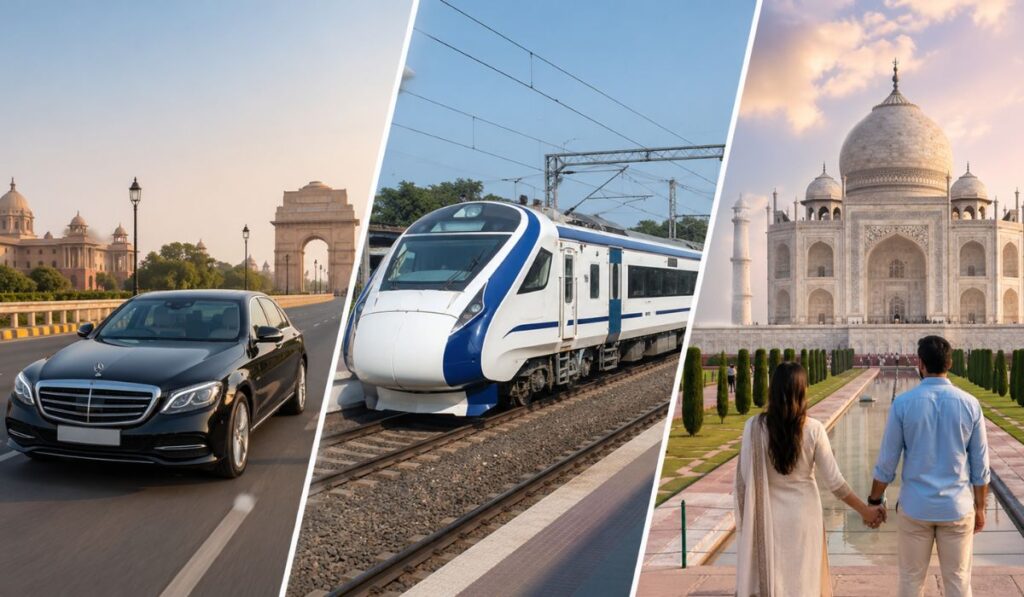
Delhi to Agra by Private Car: Route, Tips & Taj Guide

The Agra Cantt railway station is served by several fast trains from Delhi, and the train journey on express services takes approximately 1.5 to 2 hours. Trains are a valid option for budget travelers or those comfortable with Indian rail booking systems.

However, for most international visitors — particularly those doing a sunrise visit — private car travel offers meaningful advantages:

The train requires you to reach the Delhi railway station (typically Hazrat Nizamuddin or New Delhi station) and navigate the platform system, which can be daunting in the pre-dawn hours. An early morning Agra-bound express train from Delhi typically departs around 6:00 AM, meaning you will not arrive in Agra before 8:00 AM — too late for sunrise.

From Agra Cantt station, you still need to arrange a local auto-rickshaw or taxi to reach the Taj Mahal — another negotiation and another logistics point.

By private car, you are collected from your door at whatever time suits your sunrise plan, driven directly, and returned door to door. For families, couples, or anyone prioritizing comfort and schedule control, this distinction is significant.

Train travel wins on cost and speed. Private car travel wins on flexibility, comfort, and seamless logistics.

factors to consider

FactorPrivate CarTrain
Sunrise FlexibilityExcellentLimited
Door-to-DoorYesNo
ComfortHighModerate
BudgetHigherLower

What to Pack for Your Taj Mahal Visit

Bring with you: your passport or government-issued photo ID, a confirmed entry ticket if booked online, at least one litre of water per person, high-SPF sunscreen (April through September especially), sunglasses, a pair of socks for the marble platform, cash in Indian rupees and/or a UPI-capable payment method for incidentals, and a compact bag for personal items.

Leave at your hotel or in the car: large backpacks and luggage (restricted and subject to cloakroom deposit), drones (strictly prohibited), professional tripods, selfie sticks (restricted in some areas), and any electronics beyond personal cameras and phones.

Sample Same-Day Itinerary: Delhi to Agra by Private Car and Back

This itinerary is designed for a sunrise visit with an Agra Fort add-on.

4:30 – 5:00 AM — Departure from your Delhi hotel. Your driver heads to the Yamuna Expressway.

7:30 – 8:00 AM — Arrival at the East Gate parking zone, Agra. Transfer to the East Gate on foot or by battery bus. Present your ticket and ID.

8:00 – 10:30 AM — Taj Mahal visit. Explore the gardens, photograph the main mausoleum, and if you have the additional mausoleum ticket, enter the inner chamber.

11:00 AM – 1:00 PM — Agra Fort. Drive to the Fort (approximately 10 to 15 minutes from the Taj Mahal). Two hours is sufficient for a thorough visit.

1:00 – 2:00 PM — Lunch in Agra. Your driver can recommend a reputable restaurant or your tour operator can include a lunch stop in your arrangement.

2:30 – 3:00 PM — Optional: Mehtab Bagh, the Mughal garden complex directly across the Yamuna from the Taj Mahal. This is a quieter, less-visited spot offering a distinctive rear view of the monument.

4:00 – 5:00 PM — Departure from Agra back to Delhi via Yamuna Expressway.

7:00 – 8:00 PM — Arrival at your Delhi hotel, accounting for evening traffic.

FAQs – Delhi to Agra by Private Car

Can I visit the Taj Mahal from Delhi in one day?

Yes, absolutely. A same-day round trip from Delhi to Agra by Private Car is one of the most commonly done excursions in India. With a pre-dawn departure and a private car, you can comfortably visit both the Taj Mahal and Agra Fort and return to Delhi the same evening.

Is the Taj Mahal closed on Fridays?

Yes. The Taj Mahal is closed every Friday for general visitors. Plan your visit for any other day of the week. This rule is consistent and non-negotiable — it is not weather-dependent or subject to change.

Can private cars go directly to the Taj Mahal gates?

No. Polluting vehicles are restricted within the zone surrounding the monument. Your private car will drop you at a designated parking zone, from which you walk or take a battery bus to the gate. This is a normal part of the visit and applies to all tourist vehicles.

Which gate is best for a sunrise visit?

The East Gate is generally recommended for sunrise visitors. It is the most popular early-morning entry point and has better vehicle drop-off logistics. Arrive early — the queue at the East Gate can build quickly after opening.

Is the sunrise visit worth it?

For most visitors, yes — especially between October and March when the light is soft, the air is cooler, and the crowds are thinner than mid-morning. In summer, sunrise is essentially mandatory for comfort. The combination of early light on white marble and fewer people in the gardens makes the experience qualitatively different from a midday visit. If you have the option, choose sunrise.

What is the ASI and why does it matter for my visit?

The Archaeological Survey of India is the government body that manages and protects India’s protected monuments, including the Taj Mahal. It sets all official visiting hours, issues tickets through its systems, licenses official guides, and enforces conservation rules. Every official rule and guideline in this article derives from ASI governance. Booking through ASI-linked platforms and following ASI rules is the safest and most reliable way to visit.

Is there an extra charge to enter the main mausoleum?

Yes. The standard gate entry ticket covers access to the complex and gardens. Entering the inner mausoleum itself requires an additional ticket, which should be purchased at the same time as your gate entry. Do not assume the base ticket includes mausoleum access.

What is night viewing at the Taj Mahal?

Night viewing is a separate, officially sanctioned experience available on the full moon night and the two nights before and after it each month. Tickets are limited, must be booked in advance through official channels, and provide access to a viewing area outside the main gardens rather than inside them. It is managed entirely by ASI and is subject to specific restrictions and availability.

A Note on Planning Your Trip

The Delhi to Agra journey is one of those travel experiences that rewards preparation. The monument itself is extraordinary, but the quality of your visit depends enormously on timing, knowledge, and logistics. Arriving at the wrong gate, missing the mausoleum ticket, encountering a scam tout, or being turned away on a Friday — these are entirely avoidable situations with the right information.

For travelers who value flexibility, a guaranteed sunrise arrival, and a seamless door-to-door experience, private car travel remains one of the most convenient and stress-free ways to see Agra from Delhi. Whether you are organizing this independently or through a trusted tour provider, the information in this guide gives you everything you need to plan with clarity and confidence.

All visitor rules, ticketing information, and monument protocols referenced in this guide reflect official ASI (Archaeological Survey of India) guidelines. Opening times vary by season based on sunrise. Always verify current timings and ticket availability before your visit through official ASI-linked sources.

You’ve booked your flights. You’ve shortlisted the places — the Taj Mahal, Rajasthan’s forts, the backwaters of Kerala. But then comes the question that stops most travelers cold:

Private vs Group Tours in India — which one should you choose?

It sounds simple, but it isn’t. The wrong choice can mean rushing through places you wanted to explore slowly, sharing a crowded bus when you expected comfort, or spending more on a premium experience you didn’t really need.

In this guide, we break down private vs group tours in India in a clear, practical way—so you can choose the option that truly fits your travel style, budget, and expectations.

This guide cuts through the noise. We’ll compare both options honestly — on cost, comfort, flexibility, and real-world suitability — and give you a direct recommendation based on your travel style.

By the end of this article, you’ll know exactly which option is right for you.

What is a Private Tour in India?

A private tour means the trip is organized exclusively for you — or your group. You get a dedicated vehicle, a private driver, and often a local guide at each destination. No other travelers join your journey. The itinerary is built around your preferences.

A private trip in India typically includes:

  • A dedicated air-conditioned vehicle (sedan, SUV, or tempo traveler based on group size)
  • A professional English-speaking driver for the full journey
  • Flexible daily schedules — you decide when to start, stop, and rest
  • Hotel options across budget categories, from guesthouses to palace hotels
  • Private local guides at major attractions (optional but recommended)

The defining feature of a private tour isn’t luxury — it’s control. You travel at your pace, change plans without asking permission, and experience India on your own terms.

Services like Private Car Driver India specialize in exactly this: providing experienced drivers and vehicles for custom India road trips, whether that’s the Golden Triangle, Rajasthan, South India, or a combination route you’ve designed yourself.

What is a Group Tour?

3 day rajasthan tour with private car

A group tour is a pre-designed itinerary that you share with other travelers — typically 10 to 25 people. The tour operator fixes the route, the hotels, the timing, and the activities. You pay for a spot and join the group on departure day.

Group tours typically include:

  • Shared transportation (coach or minibus)
  • Pre-booked hotels (usually mid-range, 3–4 star)
  • A group leader or tour manager
  • Fixed timings for every activity
  • Some meals included

The appeal is simplicity. Everything is arranged. You show up, follow the group, and let someone else handle logistics. For first-time travelers who feel overwhelmed by planning, this can be a relief.

The trade-off? You lose flexibility. The group moves together, eats together, and leaves on schedule — whether or not you’re ready.

Private vs Group Tours: Direct Comparison

FactorPrivate TourGroup Tour
FlexibilityFull — change plans anytimeNone — fixed itinerary
Cost (budget)Higher per person (solo/couple)Lower per person
Cost (group of 4+)Competitive or cheaperModerate
ComfortPrivate vehicle, your paceShared coach, fixed schedule
PersonalizationFully customizedStandard route
PaceYou decideGroup decides
PrivacyCompleteLimited
Social experienceJust your groupMeet fellow travelers
SafetyVetted private driverGuide manages group safety
Best forCouples, families, luxury travelersBudget solo travelers, social travelers

What the Table Doesn’t Tell You

Numbers and checkboxes miss the texture of real travel. Here’s what actually matters:

On a group tour to Jaipur, you might have exactly 45 minutes at Amber Fort before the bus leaves — regardless of whether you’ve seen everything or not. And On a private tour, you stay until you’re done.

On a private tour, you stop at a roadside dhaba between Agra and Jaipur because your driver recommends the dal makhani. On a group tour, lunch is pre-arranged at a tourist restaurant chosen for its capacity to seat 22 people.

These small moments define a trip to India.

Cost Comparison: What Does Private & Group Tours in India Actually Cost?

This is where most comparison articles stay vague. Here are realistic 2026 price ranges:

Group Tours in India

  • Budget group tours (10–20 people, 3-star hotels, 7–10 days): USD 800–1,400 per person
  • Mid-range group tours (8–15 people, 4-star hotels, 7–10 days): USD 1,500–2,500 per person
  • Premium small group tours (6–10 people, 4–5 star hotels): USD 2,800–4,500 per person

Flights are usually excluded. Meals are partially included. Tipping guides and drivers is expected on top.

Private Tours in India

  • Solo traveler, budget hotels, 7–10 days: USD 1,200–2,000
  • Couple, mid-range hotels, 7–10 days: USD 1,500–2,500 (split between two = USD 750–1,250 each)
  • Family of 4, mid-range hotels, 10 days: USD 2,500–4,000 (split = USD 625–1,000 per person)
  • Luxury private tour, 10–14 days: USD 5,000–10,000+ for the group

The key insight: A private tour for a family of four or a group of friends often costs less per person than an equivalent group tour — with far more flexibility and comfort.

Solo travelers pay more on private tours because the vehicle and driver cost isn’t split. For solo budget travelers, a group tour makes genuine financial sense.

Pros and Cons of Private vs Group Tours in India

Pros and Cons of Private Tours in India

Rajasthan Tour with a Private Car and Driver

Advantages

Complete flexibility. Your driver waits while you spend an extra hour at the Mehrangarh Fort. You leave Jaipur a day early if you’re done. You add a village detour that wasn’t in the original plan.

Privacy and comfort. Your vehicle is yours. There’s no negotiating for window seats or waiting for slow walkers in the group. Families with young children especially appreciate this.

Personalized experiences. A good private driver in India becomes a genuine travel companion — recommending local food, explaining customs, navigating situations that a group tour leader managing 20 people simply cannot.

Better value for groups. A group of four traveling privately will almost always get more comfort, more flexibility, and often lower per-person cost than a mid-range group tour.

Safety on your terms. You know who your driver is. You’re not sharing a vehicle with strangers. For solo female travelers or families, this matters.

Limitations

Higher cost for solo travelers. The vehicle and driver cost doesn’t split, making it more expensive per person if you’re traveling alone.

More planning required. You need to research and book hotels, decide on routes, and communicate preferences upfront. It’s not as plug-and-play as a group tour.

No built-in social element. If meeting fellow travelers is important to you, a private tour won’t provide that.

Pros and Cons of Group Tours in India

Advantages

Lower per-person cost for solo travelers. The most significant advantage. Solo travelers pay only a small single supplement rather than the full vehicle cost.

Zero planning required. Hotels, transport, guides, and activities are all pre-arranged. You just show up.

Social experience. Many travelers form genuine friendships on group tours. For solo travelers seeking company, this is a real benefit.

Knowledgeable group leader. A good group tour leader handles logistics, manages scams, explains cultural context, and generally makes India easier to navigate for first-timers.

Limitations

Fixed schedule — no exceptions. If you fall in love with a sunset in Udaipur, you still leave at 7 AM tomorrow because the group does.

Shared everything. The vehicle, the guide’s attention, the dinner tables, the check-in queues. For travelers who value quiet and space, this is exhausting.

Lowest common denominator problem. Itineraries are designed for the average traveler in the group. If you want something specific — more time at temples, less time at souvenir shops — you’re out of luck.

Mixed traveler types. You might be a keen history enthusiast paired with travelers who want quick photos and move on. Group dynamics can be frustrating.

Which One is Right for You in Private vs Group Tours in India?

Private vs Group Tours in India: Which One is Better in 2026?

Couples

Recommendation: Private tour.

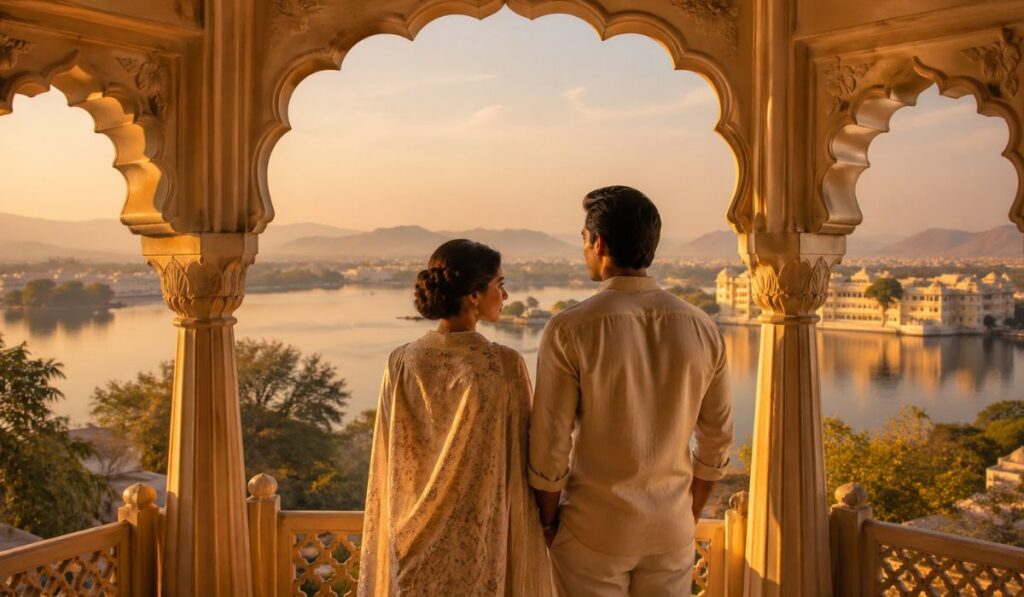
India is deeply romantic — sunrise at the Taj Mahal, houseboat dinners in Kerala, evenings in Udaipur. These experiences are diluted when shared with 18 other people. A private trip in India lets couples move at their own pace, choose restaurants they actually want to try, and have the vehicle to themselves. The cost for two people is comparable to a mid-range group tour, with vastly better experience.

Families with Children

Recommendation: Private tour — strongly.

Children don’t follow group schedules. They need bathroom breaks at inconvenient times, they get tired earlier, they want to stop at random things that interest them. A private tour accommodates all of this. You can adjust daily distances, choose child-friendly hotels, and avoid the stress of keeping pace with a group. India with kids is wonderful — but only if you’re not rushing.

First-Time Solo Travelers

Recommendation: Small group tour (first trip), then private.

If you’re arriving in India for the first time and feeling overwhelmed, a small group tour (8–12 people) is a reasonable starting point. You’ll learn how India works, build confidence, and benefit from a tour leader handling the unknowns. After one trip, most solo travelers switch to private for subsequent visits because they’ve realized how much they missed by being tied to a group.

Luxury Travelers

Recommendation: Private tour, without question.

If you’re staying at heritage palace hotels, doing tiger safaris, and eating at curated restaurants, a group tour format simply doesn’t match. Luxury travel in India is deeply personal — it’s about private sunset boat rides in Udaipur, early-access Taj Mahal visits at dawn, and a driver who knows every road and every shortcut. Luxury group tours exist, but they still compromise on flexibility.

Why Private Tours Are Growing in India

Post-2020 travel shifted meaningfully. Travelers increasingly want fewer crowds, more control, and experiences that feel personal rather than packaged.

Several factors are driving private tour growth specifically in India:

India’s diversity demands customization. India isn’t one destination — it’s dozens. Rajasthan, Kerala, the Himalayas, and the Northeast are all radically different. A private itinerary lets you focus on what genuinely interests you rather than covering a generic highlights reel.

Safety and hygiene preferences. Sharing a coach with 20 strangers is less appealing than a private vehicle with one trusted driver. This preference has become permanent for many travelers.

Better internet access means easier planning. Booking a private trip in India used to require specialist travel agents. Today, services like Private Car Driver India make it straightforward to arrange a custom journey with a vetted driver, transparent pricing, and flexible itineraries — directly.

Value perception has changed. Travelers are increasingly willing to pay a bit more for an experience that’s actually theirs rather than a shared tour that hits the same spots in the same order as every other group.

Final Verdict

Here’s a clear answer: private tours are better for most travelers visiting India in 2026.

The exception is solo budget travelers who want a social experience. For everyone else — couples, families, groups of friends, luxury travelers, or anyone who values flexibility — a private tour delivers a meaningfully better India experience.

India rewards slow, curious, flexible travel. The roadside conversations, the detours to lesser-known temples, the extended chai breaks while your driver tells you about his village — none of this happens when you’re glued to a group schedule.

If you’re planning a private trip in India or looking to hire a private car driver in India for a custom itinerary, the investment in flexibility will pay off in moments you’ll remember long after you’re home.

FAQs – Private vs Group Tours in India

Is a private tour worth it in India?

Yes, for most travelers. A private tour gives you full control over your itinerary, a dedicated vehicle and driver, and the flexibility to travel at your own pace. For couples and families, the per-person cost is often comparable to mid-range group tours while the experience is significantly better. Solo travelers on a tight budget are the main exception.

Are group tours safe in India?

Generally, yes. Reputable group tour operators use vetted drivers and guides who handle logistics and navigate common tourist scams. However, safety is largely dependent on the operator’s quality. A well-arranged private tour with a vetted driver offers equally strong safety — often more, since you’re not in a shared coach with strangers.

How much does a private driver cost in India?

A private driver in India typically costs between USD 40–80 per day for the vehicle and driver combined, depending on the vehicle type and route. For a 10-day Rajasthan circuit, expect to pay USD 500–800 total for transport. This cost is split among all travelers in your group, making it very competitive for families or groups of four or more.

Which option is best for first-time visitors to India?

First-time visitors with a travel companion (couple, friends, family) should choose a private tour. A vetted private driver who knows India well is often more valuable than a group tour leader managing 20 people. First-time solo travelers may find a small group tour useful for their initial India trip, but most switch to private on return visits once they understand the country’s rhythm.

The Taj Mahal visiting time starts 30 minutes before sunrise and closes 30 minutes before sunset. It remains closed every Friday.

here is why most visitors still have a bad experience:

  • They arrive too late (after 9 AM)
  • They do not plan for queues (waiting time can be 1–2 hours)
  • They underestimate the heat (Agra gets very hot by 11 AM)
  • They forget that Friday is closed

If you are planning a Taj Mahal tour by car, reaching early is the biggest challenge. The drive takes 3–4 hours one way. Without a proper plan, you may end up standing in line when you could be enjoying the monument.

This guide is based on real visitor experiences and updated for 2026. No fluff. Just practical help.

Why Timing Matters

Let us be honest. You are visiting the Taj Mahal maybe once in your life. You want beautiful photos, peaceful moments, and good memories. But timing can ruin all of that.

What happens at different times of the day:

TimeCrowd LevelHeatPhoto QualityWaiting Time
Sunrise – 8 AMLowPleasantGolden light, soft shadows10–15 min
8 AM – 9 AMMediumWarmGood20–30 min
9 AM – 11 AMHighHotHarsh sunlight45–60 min
11 AM – 1 PMVery HighVery HotPoor (overexposed)60–90 min
AfternoonSlightly lessExtremeGlare, washed out45–60 min

A difference of just 1–2 hours can completely change your experience at the Taj Mahal. The same ticket price. The same monument. But one gives you peace and beauty; the other gives you sweat and crowds.

Visitor Name Richard reaches at 6:00 AM. He finishes by 9:00 AM. He takes 50 clean photos, sits on a bench, and enjoys the silence. Another Visitor Name Paras reaches at 9:30 AM. He waits 1 hour to enter. By the time he reaches the main dome, it is 10:30 AM, the sun is harsh, and every photo has 20 strangers in the background.

Which one do you want to be?

Taj Mahal Visiting Time

Taj Mahal Visiting Time – Complete Guide 2026

Here are the official timings for 2026. Note that sunrise and sunset times change with seasons.

SeasonOpening Time (approx)Closing Time (approx)
Summer (April – September)5:30 AM7:00 PM
Winter (October – March)6:30 AM5:30 PM
Monsoon (July – August)5:45 AM – 6:15 AM (varies)6:30 PM – 7:00 PM

Important:

  • Closed every Friday
  • Ticket counters close 45 minutes before sunset
  • Last entry is 30 minutes before sunset

Always check the local sunrise time for the exact date of your visit. You can simply Google “Agra sunrise time” one day before.

Best Time to Visit

Early Morning (Best Choice – 5:30 AM to 7:30 AM)

  • Peaceful atmosphere – you can hear birds and the Yamuna river flow
  • Less crowd – only serious travelers and photographers
  • Better photos – soft golden light, no harsh shadows
  • Cooler temperature – even in summer, mornings are pleasant

Late Afternoon (Second Best – 3:00 PM to closing)

  • Fewer school groups and large tours
  • Beautiful sunset light on white marble
  • Less heat than midday

Late Morning (Common Mistake – 9 AM to 11 AM)

  • Crowded with tour buses
  • Long queues for tickets and security
  • Children crying, people pushing, guides shouting

Midday (Worst – 11 AM to 2 PM)

  • Extreme heat (often 40°C+ in summer)
  • Harsh light makes the marble look flat
  • You will be exhausted within 30 minutes

This is why early arrival makes such a big difference. If you only remember one thing from this guide, remember: go at opening time.

Problem you may Face

Taj Mahal Visiting Time – Complete Guide 2026

For many travelers, the biggest difficulty is not the Taj Mahal visiting time – it is reaching there at the right time without stress.

Let us break down the real problems:

Long distance from Delhi
Delhi to Agra is about 230 km. By car, it takes 3 to 4 hours one way. By train, the fastest (Gatimaan Express) takes 1 hour 40 minutes, but you still need to get from Agra station to the Taj Mahal (another 30–40 minutes).

Early wake-up needed
If you want to reach by 6:00 AM from Delhi, you must leave by 2:30 AM (by car) or catch a train around 5:00 AM. That means waking up at 3:30 or 4:00 AM. Many visitors find this very hard to do on their own.

Traffic unpredictability
Roads near Agra can be blocked by trucks, weddings, or religious processions. A 3-hour drive can become 5 hours. Then you miss the good timing.

Problem 4 – Ticket and entry confusion
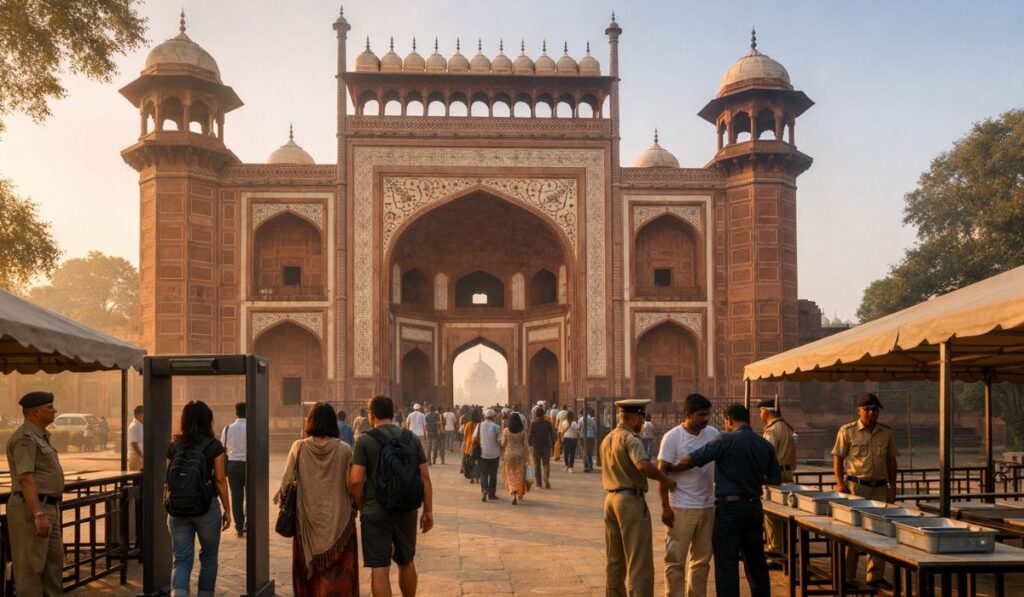
There are three gates. Two different ticket counters. Security checks. Shoe keeping. Bottled water rules. First-time visitors waste 45–60 minutes just figuring things out.

To avoid this, many visitors prefer a planned day trip where travel, timing, and entry are already aligned. This means someone else handles the train or car booking, the gate strategy, and the timing so you can focus on the experience instead of logistics. You do not have to wake up confused. You just follow a simple plan.

Where Most Visitors Go Wrong

Based on hundreds of visitor reviews, here are the top 5 mistakes:

  1. Arriving after 9 AM – The single biggest mistake. You will stand in line for 1 hour in the sun.
  2. Not knowing gate strategy – Everyone goes to West Gate because it is famous. East Gate is much faster but less known.
  3. Underestimating travel time – People think “Agra is close.” It is not. Especially with traffic.
  4. Carrying too many bags – No large bags allowed. You will have to pay for locker storage and waste time.
  5. No clear plan for Friday – Many travelers book tickets for Friday and then find it closed. Check before you go.

These small mistakes often turn a dream visit into a rushed, hot, and disappointing experience. You do not need to make them. A little planning fixes everything.

Entry Gates Strategy

The Taj Mahal has three entry gates. Most visitors do not know the difference. Here is what you need to know:

GateBest ForOpens AtCrowd LevelInsider Tip
East GateFastest entrySame as openingLowUse this one. Very few tourists know.
West GateMain gateSame as openingVery HighLongest queues. Avoid if possible.
South GateBackup option30–45 minutes laterMediumOpens late. Only use if others are too crowded.

Choosing the right gate can save you 30–45 minutes of waiting. That is 30–45 minutes you can spend inside the Taj Mahal instead of standing in a line.

Ask your taxi or auto driver to drop you at the East Gate. Many drivers take you to West Gate because it is easier for them. Be firm.

Night Viewing

The Taj Mahal is also open for night viewing on specific nights. This is a special experience, but not necessary for most visitors.

When: Full moon nights + two nights before and two nights after
Time slots: 8:30 PM, 9:00 PM, 9:30 PM (each slot 30 minutes)
Entry limit: Only 400 people total per night
Booking: Must be done 1 day in advance at the Archaeological Survey of India office
Cost: Higher than day ticket (around ₹750 for Indians, ₹1100 for foreigners in 2026)

Is it worth it?

  • Yes if you love moonlit views and silence
  • No if you are on a budget or short on time

Keep this section short. Most visitors do not need night viewing.

Ideal Visit Plan

Here is a simple, step-by-step plan that works for 90% of visitors. Read this and imagine yourself doing it.

If you are staying in Agra (recommended):

  • 5:00 AM – Wake up, freshen up, light breakfast
  • 5:30 AM – Leave hotel (carry only: phone, camera, water, ID, small cash)
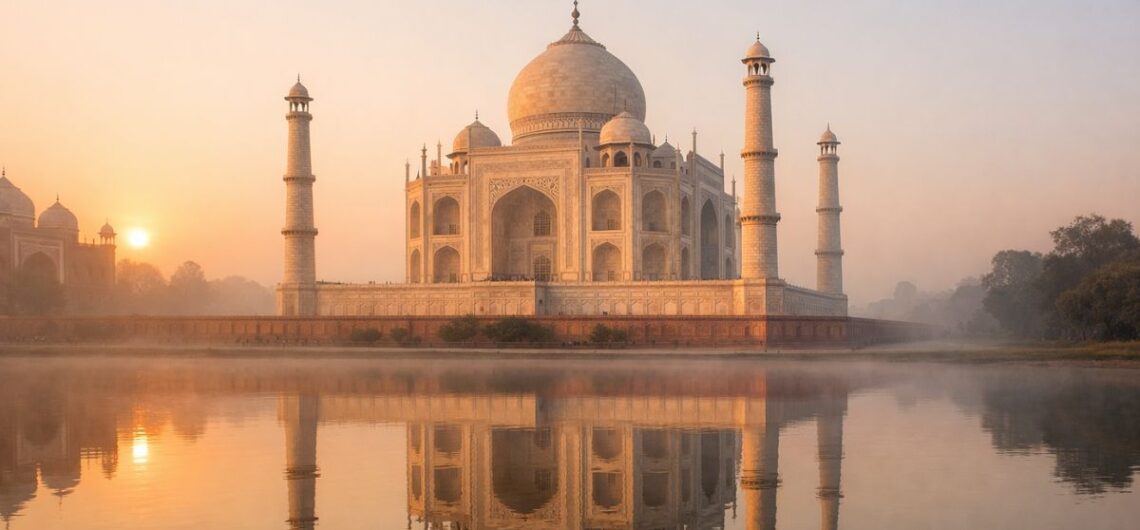
  • 5:45 AM – Reach East Gate
  • 6:00 AM – Enter as gates open
  • 6:00 AM – 8:30 AM – Explore slowly. Take photos from the main arch, the side gardens, and the river bank. Sit on a bench for 10 minutes just watching.
  • 8:30 AM – Exit before crowds build
  • 9:00 AM – Breakfast at a nearby hotel or return to hotel for rest

If you are coming from Delhi same day (hard but possible):

  • 3:00 AM – Wake up
  • 3:30 AM – Leave Delhi by car (or take 5:00 AM Gatimaan Express from Nizamuddin)
  • 6:30 AM – Reach Agra
  • 7:00 AM – Enter Taj Mahal (you will miss the very first hour, but still better than 9 AM)
  • 7:00 AM – 9:30 AM – Explore
  • 10:00 AM – Leave Agra
  • 1:30 PM – Back in Delhi

Insight: A simple plan makes the entire experience smoother and more enjoyable. You do not need to be a travel expert. You just need to follow a plan.

Practical Tips

  1. Start early – This is number one for a reason. No exceptions.
  2. Carry light – Only a small bag (A4 size max). No tripods, no large backpacks.
  3. Keep ID ready – You will need it for ticket verification. Passport, Aadhar, or driver’s license.
  4. Check weather – Avoid peak summer (May–June) if possible. If you must go, carry an umbrella and water.
  5. Choose less crowded entry – East Gate. Remember this.
  6. Wear comfortable shoes – You will walk 3–4 km inside.
  7. Buy tickets online – Official website or at the gate. Online saves 30 minutes.
  8. Cover your head and shoulders – Not strictly enforced, but respectful.
  9. Keep shoe covers – You get them with your ticket. Do not throw them away.
  10. Do not trust touts – People will say “This gate is closed” or “Follow me for fast entry.” Ignore them. Follow the signs.

FAQs

Q: What is Taj Mahal visiting time today?

A: It opens 30 minutes before sunrise and closes 30 minutes before sunset. Check “Agra sunrise time” on Google for today’s exact time.

Q: Is Taj Mahal open on Friday?

A: No. It is closed every Friday for weekly prayers at the mosque inside.

Q: What is the best time to visit?

A: Early morning, right at opening time. Second best: late afternoon (3 PM onwards).

Q: Can I visit at sunrise?

A: Yes. In fact, that is the best time. The gates open exactly 30 minutes before sunrise, so you are inside when the sun rises over the dome.

Q: How early should I reach?

A: At least 30–45 minutes before opening time to buy tickets, go through security, and walk to the gate.

Conclusion

Understanding the Taj Mahal visiting time helps you avoid crowds, plan better, and enjoy a peaceful experience. With the right timing and a simple plan, your visit can be smooth, memorable, and stress-free.

You do not need to be rich. You do not need a luxury tour. You just need to wake up early and choose the right gate.

Final soft nudge: Many travelers find that planning their journey in advance makes all the difference. Whether you book a full day trip or simply set your alarm for 5 AM, the result is the same: you will see the Taj Mahal the way it was meant to be seen – quiet, beautiful, and unforgettable.

Have a wonderful visit in 2026.