A travel guide for visitors planning Taj Mahal tours from Delhi and Agra

wondering whether the decision of Sunrise Taj Mahal Tour Worth It

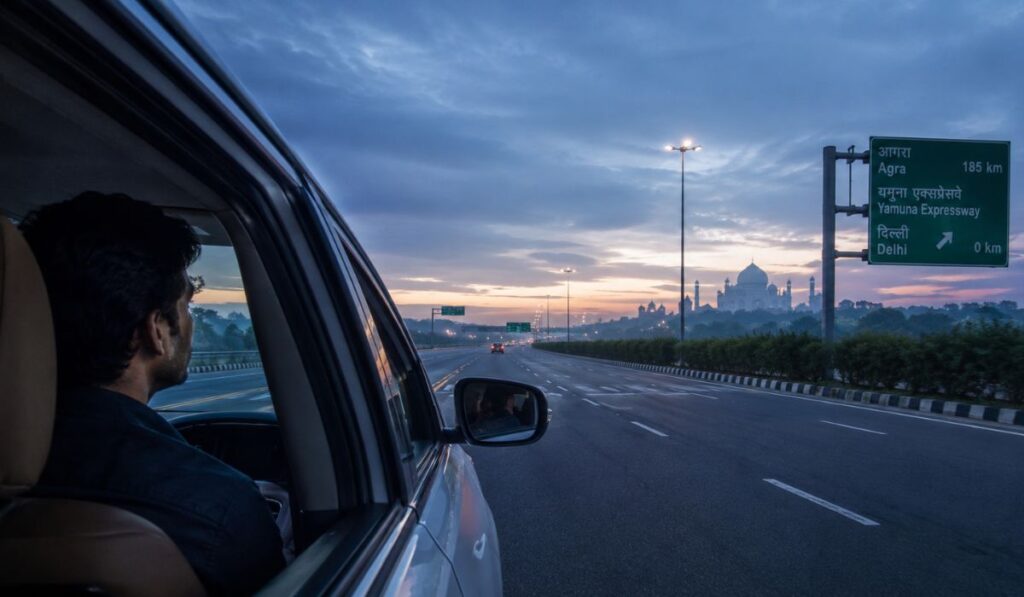
It’s 4am. The Yamuna Expressway is almost silent — just your headlights and the occasional truck heading south. You’re three hours from the Taj Mahal, half asleep, wondering whether the decision of watching Sunrise at Taj Mahal was a reasonable decision or is it Worth It.

Then the East Gate opens. The forecourt is nearly empty. In the grey pre-dawn light, the white marble dome is just a shape against the sky. And then the sun comes up — and in about fifteen minutes, that shape turns gold, then pink, then a blinding white that you will not see again for the rest of your life unless you come back at dawn.

Is Sunrise Taj Mahal Tour Worth It? In most cases: yes. But the honest answer has conditions — and knowing them before you book makes all the difference. This guide covers what the light actually does to the marble, when winter fog will ruin your morning, which months to go in 2026 and which to avoid, how to time the drive from Delhi, and who should probably skip sunrise entirely.

What actually happens at sunrise that make Sunrise Taj Mahal Tour Worth It

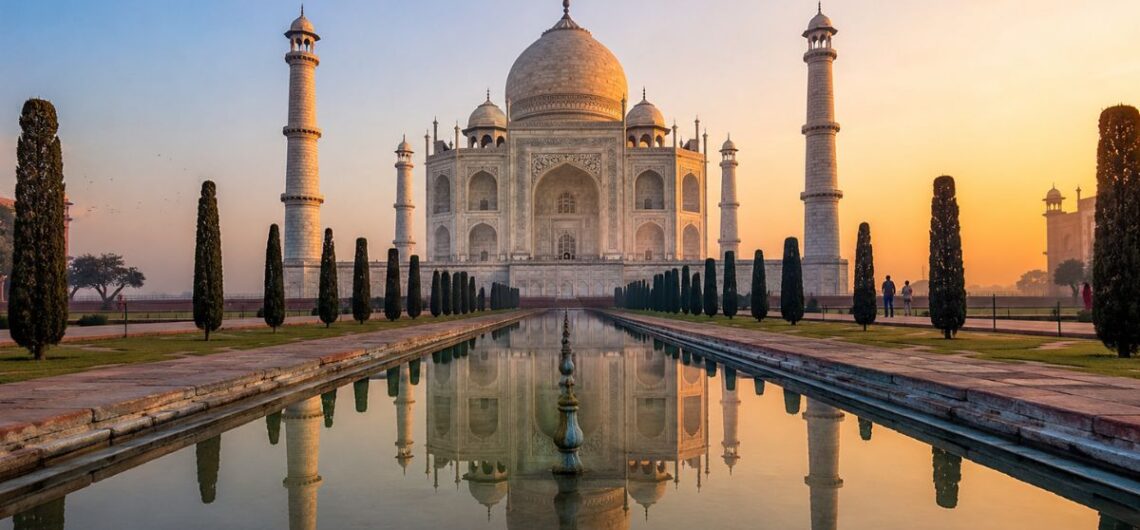
The Taj Mahal is white marble. That sounds simple, but white marble does something extraordinary in directional light — it absorbs and reflects the colour of the sky around it. In the minutes before sunrise, the dome is a pale grey. Then comes a flush of pale pink, followed by a deep gold as the sun crests the horizon. By 7:30am, as the angle steepens, it bleaches back toward brilliant white. The whole sequence takes about forty minutes, which is why a Taj Mahal Sunrise Tour feels completely different from a standard daytime visit.

This colour shift is one of the main reasons photographers and serious travelers wake up at 3am for a sunrise experience. It’s not subtle — you notice it happening in real time while standing in the forecourt. Many visitors booking a private Taj Mahal tour by car from Delhi specifically choose early morning departures so they can witness these changing marble tones before the daytime crowds arrive.

The other factor is the reflection pool — the long hauz-e-kausar canal running from the main gate to the mausoleum. In the early morning, before wind picks up, the water is perfectly still. The marble dome appears twice: once in the sky, once in the water. By midday this rarely works because foot traffic and wind break the surface. At 6:30am on a calm October morning, it becomes a near-perfect mirror and one of the defining moments of a well-planned Taj Mahal tours.

Crowd levels are the third element. The Taj Mahal receives millions of visitors annually. At 9am on a peak-season day, the main vista is dense with people. At 6:30am, even in October or March, the forecourt often has fewer than a hundred visitors. That kind of stillness, in one of the most visited monuments on earth, is genuinely rare — and one of the biggest reasons travelers consider sunrise the best time to visit the monument.

Sunrise vs sunset: which is actually better?

Both have real merit. Here’s the honest comparison:

FactorSunriseSunset
Crowd levelVery low — often near-empty at openingModerate to heavy in peak season
Light qualityFront-lit warm glow on marbleDramatic backlit silhouette
Reflection poolCalm and still — perfect mirrorWind usually disturbs the surface
TemperatureCool, comfortable even in summerHot afternoons April–June
PhotographyBest for detail, colour, reflection shotsBest for silhouette and dramatic sky
From DelhiRequires 3–4am departureRelaxed mid-morning departure
Fog risk (winter)High Dec–Jan — can obscure the domeUsually clears by afternoon

The summary: sunrise wins for photographers and anyone seeking a crowd-free, emotionally resonant experience. The front-lit marble and still reflection pool are genuinely superior conditions. Sunset produces a beautiful silhouette — dramatic, especially for wide landscape shots — but the monument is backlit, meaning the intricate inlay and calligraphy details are in shadow.

Sunset is the better choice if you’re already staying in Agra and a predawn wake-up isn’t realistic. It’s not a consolation prize. But if the question is which is better in absolute terms: sunrise is.

The winter fog problem — what no one tells you
Is Sunrise Taj Mahal Tour Worth It? An Honest Guide (2026)

If you’re planning a sunrise visit between November and mid-February 2026, you need to understand Agra’s winter fog — and most travel blogs skim past it in a single sentence.

Here’s what actually happens: dense valley fog sits over the Yamuna River basin and can completely obscure the Taj Mahal until 9, 10, even 11am. Not “slightly hazy.” Invisible. The dome disappears. Tourists who arrive at 6am in December sometimes spend two hours staring at a white blur where the monument should be. In December and January, this is the norm, not the exception.

The fog usually lifts by mid-morning, and you often get a perfectly clear view — sometimes with a soft residual haze that has its own strange beauty. So the visit isn’t wasted. But the specific magic of golden marble at dawn may not materialise.

If you’re visiting in this window:

  • Check the Agra weather forecast and AQI the night before
  • Consider arriving at 8–9am rather than at sunrise — you may see more
  • Build flexibility into your schedule so you can wait out the fog
  • Mentally prepare for a different but still extraordinary experience

Highest fog risk months in 2026: December 2025 through January and into February. March onward, fog is rarely an issue.

Best months for a sunrise visit in 2026

MonthConditionsVerdict
JanuaryDense fog common. Marble invisible until 9–11am High fog risk
FebruaryFog easing but still possible mid-month Check forecast first
MarchClear skies, cool mornings, stunning golden light Best season
AprilExcellent clarity, slight warmth by 7am Very good
MayPre-dawn heat building. Clear skies. Leave Delhi by 2:45am
JuneVery hot pre-dawn. Clear but draining Committed early risers only
July–SeptemberMonsoon. Dramatic skies, rain likely Unpredictable but moody
OctoberPost-monsoon clarity, low crowds, ideal light Best season
NovemberExcellent — fog risk starts late month Very good
DecemberPeak fog month. Stunning if clear, invisible if not Plan for mid-morning

March, October, and early November are the sweet spots for 2026. Post-monsoon October gives you the best clarity of the year combined with comfortable temperatures and a sunrise around 6:15am — an easier alarm than the 5:45am summer schedule.

The photography advantage — why sunrise light changes everything

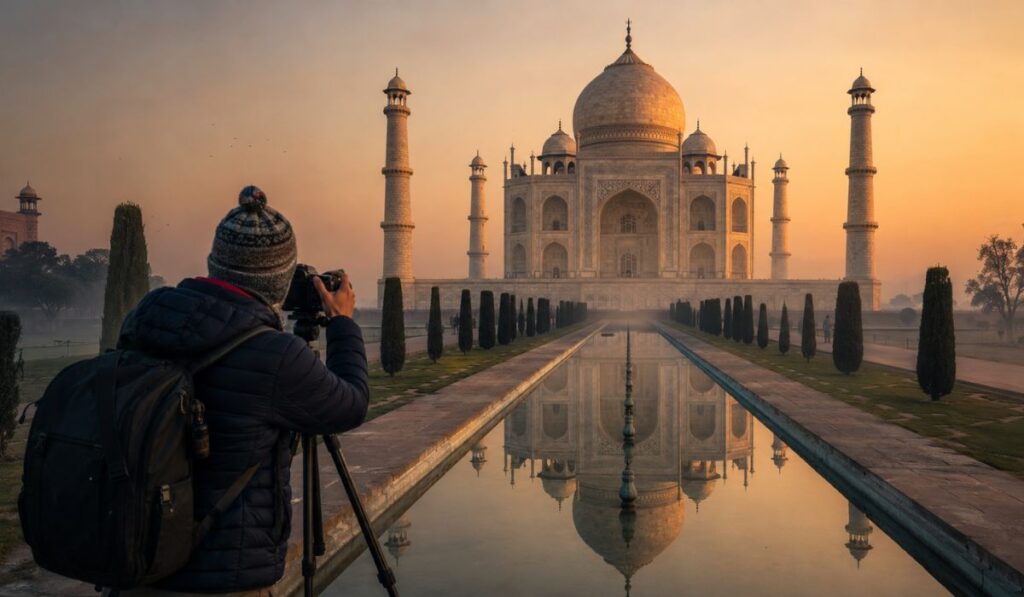
Photographers plan entire India trips around this window. The reason is physics: white marble is a highly reflective surface, and at dawn, with the sun at a low angle directly in front of the monument, light falls almost tangentially across the facade. This creates soft, warm illumination that brings out the depth of the inlay work and the texture of the marble. It’s one of the main reasons photography-focused travelers often prefer a private Taj Mahal tour by car, allowing them to arrive before sunrise without dealing with train schedules or crowded public transport.

By 9am, the sun is higher and the light is harsher. Shadows become harder. The warm golden tone has bleached to flat white. The same monument — a completely different photograph.

Practical tips for sunrise photography in 2026

  • Arrive before gate opening and position yourself on the central axis of the reflection pool
  • The first 15 minutes after sunrise are the critical window — move fast, then settle
  • Shoot RAW if possible; colour temperature shifts quickly and you’ll want to adjust white balance
  • A wide lens (24mm or wider) captures the full reflection pool in the foreground with the dome above
  • Don’t forget to turn around — the dawn sky behind you, framed by the main gateway, is often spectacular
  • Tripods are permitted but require a separate fee, worth it for low-light long exposures

The reflection pool works best in the first 30–45 minutes after gate opening, before foot traffic creates ripples. On a still morning in October or March, the symmetrical reflection — dome above, dome below, sky between — is as close to a perfect photograph as the Taj Mahal offers. Travelers booking an early morning Taj Mahal tour by car from Delhi usually reach the monument in time for this brief photography window, which disappears quickly once larger daytime crowds arrive.

If you’re coming from Delhi: what time to leave
Is Sunrise Taj Mahal Tour Worth It? An Honest Guide (2026)

The Yamuna Expressway at 3am feels like the road belongs to you — minimal traffic, fast road, well-lit. The maths:

  • March–October sunrise (~5:45–6:15am): leave Delhi by 3:00–3:45am
  • November–February sunrise (~6:30am): leave Delhi by 3:30–4:00am
  • Allow 20–30 minutes from Agra city to the gate, parking, security, and the walk to the first vista
  • Aim to be in the entry queue at least 15 minutes before official gate opening

East Gate is generally the best choice for sunrise — shorter queues at opening and a slightly quieter approach. South Gate is the main entrance and fills up fast once the doors open.

A same-day Taj Mahal tour by car from Delhi handles all of this — departure timing, driver coordination, and return — so you arrive relaxed rather than anxious. Most same-day itineraries also include Agra Fort, which has some of the best elevated views of the Taj Mahal and takes 2–3 hours to explore. With an early sunrise arrival, you can cover both and be back in Delhi well before dinner.

Who should probably skip sunrise (and that’s fine)

Not every traveler needs to be at the East Gate at dawn. Be honest about which category you’re in:

Families with young children.

A 3am wake-up is genuinely gruelling, and the marble colour shift rarely lands the same way for young kids. The Taj is extraordinary at 9am too — don’t torture yourself.

Winter visitors in December or January. 

Unless you’ve checked the forecast and conditions look clear, fog risk means you may not see the moment you woke up at 4am for. A mid-morning arrival in winter is often more rewarding.

Anyone with limited mobility. 

The walk from the gate to the main platform is significant, and doing it at speed in low light adds unnecessary stress.

Short stopover visitors. 

If you’re only in Agra for a few hours on a tight itinerary, mid-morning flexibility is more practical than a tightly timed dawn arrival.

First-timers who aren’t photographers. 

Your first view of the Taj Mahal is extraordinary at any time of day. Sunrise is a bonus, not a requirement.

A mid-morning arrival at 8:30–9am is still significantly less crowded than noon. The light is still warm and clear in October through April. You can take your time. It’s still the Taj Mahal.

Verdict: Is Sunrise Taj Mahal Tour Worth It?

Here’s the honest answer: sunrise at the Taj Mahal is genuinely one of the most remarkable things you can do in India — in the right season, with the right timing.

October through April, on a clear morning in 2026, the experience is as close to overwhelming as travel gets. The marble changes colour. The crowds are small. The reflection pool is still. None of this is hype — it’s what actually happens when conditions align.

If you’re in winter fog season, travelling with young children, or facing a short Agra window, the pressure of an early sunrise start may not be worth it. A mid-morning visit is still extraordinary.

But if conditions align — if it’s October or March, if the forecast is clear, if you can get yourself out of bed at 3am — do it. Drive through the dark. Stand in the empty forecourt as the sky lightens. Watch what the light does to the marble.

It’s worth it.

Best Way to Experience Is Sunrise Taj Mahal Tour from Delhi

travelers who want a smooth sunrise experience usually prefer private car tours because departure timing, highway driving, parking, and gate coordination become much easier before dawn. Many same-day Taj Mahal tours also include Agra Fort and flexible return timing to Delhi.

FAQs – Is Sunrise Taj Mahal Tour Worth It

What time does the Taj Mahal open for sunrise in 2026? 

Gates open at sunrise, which varies from about 5:30am in summer to 6:30am in winter. Plan to be in the entry queue 15–20 minutes before opening. Check the Archaeological Survey of India website for exact seasonal timings before your visit.

Is the Taj Mahal foggy in the morning? 

Between November and mid-February, dense valley fog can completely obscure the Taj Mahal until 9–11am. Worst in December and January. Outside this window, morning haze is minimal. If visiting in fog season, check Agra weather and AQI the night before and consider a mid-morning arrival.

Sunrise or sunset — which is better at the Taj Mahal? 

Sunrise for photographers and crowd-free atmosphere; sunset for dramatic silhouette shots. The reflection pool is calmer at sunrise, light is front-facing, and crowds are much smaller. If you can only do one: sunrise — provided you’re willing to wake up early.

How long is the drive from Delhi to Agra for sunrise? 

Via the Yamuna Expressway, 2 to 2.5 hours at night. At 3–4am, traffic is minimal. Allow 20–30 minutes more for parking, security, and walking to the gate. A 3:30am departure from central Delhi reaches the Taj at or before sunrise across most of the year.

You’ve booked your flights. You’ve shortlisted the places — the Taj Mahal, Rajasthan’s forts, the backwaters of Kerala. But then comes the question that stops most travelers cold:

Private vs Group Tours in India — which one should you choose?

It sounds simple, but it isn’t. The wrong choice can mean rushing through places you wanted to explore slowly, sharing a crowded bus when you expected comfort, or spending more on a premium experience you didn’t really need.

In this guide, we break down private vs group tours in India in a clear, practical way—so you can choose the option that truly fits your travel style, budget, and expectations.

This guide cuts through the noise. We’ll compare both options honestly — on cost, comfort, flexibility, and real-world suitability — and give you a direct recommendation based on your travel style.

By the end of this article, you’ll know exactly which option is right for you.

What is a Private Tour in India?

A private tour means the trip is organized exclusively for you — or your group. You get a dedicated vehicle, a private driver, and often a local guide at each destination. No other travelers join your journey. The itinerary is built around your preferences.

A private trip in India typically includes:

  • A dedicated air-conditioned vehicle (sedan, SUV, or tempo traveler based on group size)
  • A professional English-speaking driver for the full journey
  • Flexible daily schedules — you decide when to start, stop, and rest
  • Hotel options across budget categories, from guesthouses to palace hotels
  • Private local guides at major attractions (optional but recommended)

The defining feature of a private tour isn’t luxury — it’s control. You travel at your pace, change plans without asking permission, and experience India on your own terms.

Services like Private Car Driver India specialize in exactly this: providing experienced drivers and vehicles for custom India road trips, whether that’s the Golden Triangle, Rajasthan, South India, or a combination route you’ve designed yourself.

What is a Group Tour?

3 day rajasthan tour with private car

A group tour is a pre-designed itinerary that you share with other travelers — typically 10 to 25 people. The tour operator fixes the route, the hotels, the timing, and the activities. You pay for a spot and join the group on departure day.

Group tours typically include:

  • Shared transportation (coach or minibus)
  • Pre-booked hotels (usually mid-range, 3–4 star)
  • A group leader or tour manager
  • Fixed timings for every activity
  • Some meals included

The appeal is simplicity. Everything is arranged. You show up, follow the group, and let someone else handle logistics. For first-time travelers who feel overwhelmed by planning, this can be a relief.

The trade-off? You lose flexibility. The group moves together, eats together, and leaves on schedule — whether or not you’re ready.

Private vs Group Tours: Direct Comparison

FactorPrivate TourGroup Tour
FlexibilityFull — change plans anytimeNone — fixed itinerary
Cost (budget)Higher per person (solo/couple)Lower per person
Cost (group of 4+)Competitive or cheaperModerate
ComfortPrivate vehicle, your paceShared coach, fixed schedule
PersonalizationFully customizedStandard route
PaceYou decideGroup decides
PrivacyCompleteLimited
Social experienceJust your groupMeet fellow travelers
SafetyVetted private driverGuide manages group safety
Best forCouples, families, luxury travelersBudget solo travelers, social travelers

What the Table Doesn’t Tell You

Numbers and checkboxes miss the texture of real travel. Here’s what actually matters:

On a group tour to Jaipur, you might have exactly 45 minutes at Amber Fort before the bus leaves — regardless of whether you’ve seen everything or not. And On a private tour, you stay until you’re done.

On a private tour, you stop at a roadside dhaba between Agra and Jaipur because your driver recommends the dal makhani. On a group tour, lunch is pre-arranged at a tourist restaurant chosen for its capacity to seat 22 people.

These small moments define a trip to India.

Cost Comparison: What Does Private & Group Tours in India Actually Cost?

This is where most comparison articles stay vague. Here are realistic 2026 price ranges:

Group Tours in India

  • Budget group tours (10–20 people, 3-star hotels, 7–10 days): USD 800–1,400 per person
  • Mid-range group tours (8–15 people, 4-star hotels, 7–10 days): USD 1,500–2,500 per person
  • Premium small group tours (6–10 people, 4–5 star hotels): USD 2,800–4,500 per person

Flights are usually excluded. Meals are partially included. Tipping guides and drivers is expected on top.

Private Tours in India

  • Solo traveler, budget hotels, 7–10 days: USD 1,200–2,000
  • Couple, mid-range hotels, 7–10 days: USD 1,500–2,500 (split between two = USD 750–1,250 each)
  • Family of 4, mid-range hotels, 10 days: USD 2,500–4,000 (split = USD 625–1,000 per person)
  • Luxury private tour, 10–14 days: USD 5,000–10,000+ for the group

The key insight: A private tour for a family of four or a group of friends often costs less per person than an equivalent group tour — with far more flexibility and comfort.

Solo travelers pay more on private tours because the vehicle and driver cost isn’t split. For solo budget travelers, a group tour makes genuine financial sense.

Pros and Cons of Private vs Group Tours in India

Pros and Cons of Private Tours in India

Rajasthan Tour with a Private Car and Driver

Advantages

Complete flexibility. Your driver waits while you spend an extra hour at the Mehrangarh Fort. You leave Jaipur a day early if you’re done. You add a village detour that wasn’t in the original plan.

Privacy and comfort. Your vehicle is yours. There’s no negotiating for window seats or waiting for slow walkers in the group. Families with young children especially appreciate this.

Personalized experiences. A good private driver in India becomes a genuine travel companion — recommending local food, explaining customs, navigating situations that a group tour leader managing 20 people simply cannot.

Better value for groups. A group of four traveling privately will almost always get more comfort, more flexibility, and often lower per-person cost than a mid-range group tour.

Safety on your terms. You know who your driver is. You’re not sharing a vehicle with strangers. For solo female travelers or families, this matters.

Limitations

Higher cost for solo travelers. The vehicle and driver cost doesn’t split, making it more expensive per person if you’re traveling alone.

More planning required. You need to research and book hotels, decide on routes, and communicate preferences upfront. It’s not as plug-and-play as a group tour.

No built-in social element. If meeting fellow travelers is important to you, a private tour won’t provide that.

Pros and Cons of Group Tours in India

Advantages

Lower per-person cost for solo travelers. The most significant advantage. Solo travelers pay only a small single supplement rather than the full vehicle cost.

Zero planning required. Hotels, transport, guides, and activities are all pre-arranged. You just show up.

Social experience. Many travelers form genuine friendships on group tours. For solo travelers seeking company, this is a real benefit.

Knowledgeable group leader. A good group tour leader handles logistics, manages scams, explains cultural context, and generally makes India easier to navigate for first-timers.

Limitations

Fixed schedule — no exceptions. If you fall in love with a sunset in Udaipur, you still leave at 7 AM tomorrow because the group does.

Shared everything. The vehicle, the guide’s attention, the dinner tables, the check-in queues. For travelers who value quiet and space, this is exhausting.

Lowest common denominator problem. Itineraries are designed for the average traveler in the group. If you want something specific — more time at temples, less time at souvenir shops — you’re out of luck.

Mixed traveler types. You might be a keen history enthusiast paired with travelers who want quick photos and move on. Group dynamics can be frustrating.

Which One is Right for You in Private vs Group Tours in India?

Private vs Group Tours in India: Which One is Better in 2026?

Couples

Recommendation: Private tour.

India is deeply romantic — sunrise at the Taj Mahal, houseboat dinners in Kerala, evenings in Udaipur. These experiences are diluted when shared with 18 other people. A private trip in India lets couples move at their own pace, choose restaurants they actually want to try, and have the vehicle to themselves. The cost for two people is comparable to a mid-range group tour, with vastly better experience.

Families with Children

Recommendation: Private tour — strongly.

Children don’t follow group schedules. They need bathroom breaks at inconvenient times, they get tired earlier, they want to stop at random things that interest them. A private tour accommodates all of this. You can adjust daily distances, choose child-friendly hotels, and avoid the stress of keeping pace with a group. India with kids is wonderful — but only if you’re not rushing.

First-Time Solo Travelers

Recommendation: Small group tour (first trip), then private.

If you’re arriving in India for the first time and feeling overwhelmed, a small group tour (8–12 people) is a reasonable starting point. You’ll learn how India works, build confidence, and benefit from a tour leader handling the unknowns. After one trip, most solo travelers switch to private for subsequent visits because they’ve realized how much they missed by being tied to a group.

Luxury Travelers

Recommendation: Private tour, without question.

If you’re staying at heritage palace hotels, doing tiger safaris, and eating at curated restaurants, a group tour format simply doesn’t match. Luxury travel in India is deeply personal — it’s about private sunset boat rides in Udaipur, early-access Taj Mahal visits at dawn, and a driver who knows every road and every shortcut. Luxury group tours exist, but they still compromise on flexibility.

Why Private Tours Are Growing in India

Post-2020 travel shifted meaningfully. Travelers increasingly want fewer crowds, more control, and experiences that feel personal rather than packaged.

Several factors are driving private tour growth specifically in India:

India’s diversity demands customization. India isn’t one destination — it’s dozens. Rajasthan, Kerala, the Himalayas, and the Northeast are all radically different. A private itinerary lets you focus on what genuinely interests you rather than covering a generic highlights reel.

Safety and hygiene preferences. Sharing a coach with 20 strangers is less appealing than a private vehicle with one trusted driver. This preference has become permanent for many travelers.

Better internet access means easier planning. Booking a private trip in India used to require specialist travel agents. Today, services like Private Car Driver India make it straightforward to arrange a custom journey with a vetted driver, transparent pricing, and flexible itineraries — directly.

Value perception has changed. Travelers are increasingly willing to pay a bit more for an experience that’s actually theirs rather than a shared tour that hits the same spots in the same order as every other group.

Final Verdict

Here’s a clear answer: private tours are better for most travelers visiting India in 2026.

The exception is solo budget travelers who want a social experience. For everyone else — couples, families, groups of friends, luxury travelers, or anyone who values flexibility — a private tour delivers a meaningfully better India experience.

India rewards slow, curious, flexible travel. The roadside conversations, the detours to lesser-known temples, the extended chai breaks while your driver tells you about his village — none of this happens when you’re glued to a group schedule.

If you’re planning a private trip in India or looking to hire a private car driver in India for a custom itinerary, the investment in flexibility will pay off in moments you’ll remember long after you’re home.

FAQs – Private vs Group Tours in India

Is a private tour worth it in India?

Yes, for most travelers. A private tour gives you full control over your itinerary, a dedicated vehicle and driver, and the flexibility to travel at your own pace. For couples and families, the per-person cost is often comparable to mid-range group tours while the experience is significantly better. Solo travelers on a tight budget are the main exception.

Are group tours safe in India?

Generally, yes. Reputable group tour operators use vetted drivers and guides who handle logistics and navigate common tourist scams. However, safety is largely dependent on the operator’s quality. A well-arranged private tour with a vetted driver offers equally strong safety — often more, since you’re not in a shared coach with strangers.

How much does a private driver cost in India?

A private driver in India typically costs between USD 40–80 per day for the vehicle and driver combined, depending on the vehicle type and route. For a 10-day Rajasthan circuit, expect to pay USD 500–800 total for transport. This cost is split among all travelers in your group, making it very competitive for families or groups of four or more.

Which option is best for first-time visitors to India?

First-time visitors with a travel companion (couple, friends, family) should choose a private tour. A vetted private driver who knows India well is often more valuable than a group tour leader managing 20 people. First-time solo travelers may find a small group tour useful for their initial India trip, but most switch to private on return visits once they understand the country’s rhythm.