
Quick Answer
The best time to visit Rajasthan is from October to March, when daytime temperatures range from 20–30°C (68–86°F) and nights are cool at 5–15°C (41–59°F). November and February offer the sweet spot — excellent weather with slightly fewer crowds than December–January. The cheapest months are April–September (summer and monsoon), though summer heat exceeds 45°C in desert areas. Best for honeymoon: October (post-monsoon greenery, full lakes, quieter palaces). Best for wildlife: April–June (Ranthambore tiger sightings peak as animals gather at water sources). Best for photography: September–October (desert turns briefly green, dramatic skies) and November–February (crisp winter light).
Key Takeaways
| Category | Best Time |
|---|---|
| Best Overall | November, February (ideal weather, manageable crowds) |
| Cheapest Time | April–September (summer heat + monsoon) |
| Peak Season | December–January (coolest weather, highest prices, biggest crowds) |
| Shoulder Season | October, March (good value, warm but manageable) |
| Off Season | April–June (extreme heat, lowest prices) |
| Best for Families | November–February (comfortable weather, flat terrain, kid-friendly activities) |
| Best for Couples | October–November (romantic weather, full lakes, quieter palaces) |
| Best for Luxury Travel | December–January (heritage hotels at their finest, clear skies) |
| Best for Desert Safari | November–February (cool days, cold clear nights) |
| Best for Wildlife | April–June (animals gather at water sources in Ranthambore) |
Introduction
Rajasthan is India’s most regal state — a land of maharajas, magnificent forts, golden deserts, and palaces that seem to float on lakes. But here’s the thing: Rajasthan’s weather is extreme, and choosing the wrong time to visit can turn your dream vacation into a dusty, sweaty ordeal.
Timing matters more in Rajasthan than almost anywhere else in India. The Thar Desert scorches at over 45°C in summer, while winter nights in Jaisalmer can drop to near-freezing. Monsoon transforms the landscape briefly green, and festivals like the Pushkar Camel Fair draw crowds from around the world.
Ask ten people when to visit and most will say “winter” and stop there — which is true, but it’s only half the story. The best time to visit Rajasthan depends on whether you prioritize pleasant weather, festivals, wildlife, photography, or lower prices. This guide breaks down every month, every festival, and every travel style so you can make the right choice.
Ready to plan your royal adventure? Explore our Rajasthan Tour Packages for expertly crafted itineraries.
Rajasthan Weather at a Glance
| Season | Months | Day Temp | Night Temp | Crowds | Hotel Prices | Best For |
|---|---|---|---|---|---|---|
| Winter | Nov–Feb | 20–30°C | 5–15°C | Peak | Highest | Sightseeing, festivals, desert camping |
| Summer | Apr–Jun | 35–45°C+ | 25–30°C | Very low | Lowest | Budget travel, wildlife (Ranthambore) |
| Monsoon | Jul–Sep | 30–38°C | 24–28°C | Low | Low | Greenery, photography, Udaipur lakes |
Rajasthan Weather by Month
January
Weather: Cool and dry — the coolest month of the year. Days are pleasant at 23°C (73°F), but nights can drop to 9°C (48°F). Rain is virtually absent (6% of days).
Crowd Level: Peak season — the busiest month after December.
Average Temperature: 23°C day / 9°C night.
Best Cities: All cities are at their best. Jaisalmer, Jodhpur, Udaipur, and Jaipur all score 10/10.
Festivals: Desert Festival in Jaisalmer (January 30 – February 1, 2026).
Activities: Fort exploration, desert camping under clear cold skies, photography in crisp winter light.
Photography: Excellent — clear blue skies, golden winter light, comfortable conditions for extended shoots.
Who Should Visit: First-time visitors, families, luxury travelers, photographers.
Packing Tips: Layers are essential. Light cotton for daytime, warm jacket, scarf, and gloves for chilly desert nights.
February
Weather: Warming slightly but still excellent. Days at 27°C (81°F), nights at 12°C (54°F). Very low rainfall.
Crowd Level: High — still peak season but slightly fewer crowds than January.
Average Temperature: 27°C day / 12°C night.
Best Cities: All cities score 10/10.
Festivals: Desert Festival continues (Jan 30 – Feb 1).
Activities: Rooftop dining, palace tours, boat rides on Lake Pichola in Udaipur.
Photography: Excellent — temperatures of 14–27°C make it perfect for all-day shooting.
Who Should Visit: All travelers — one of the two best months overall.
Packing Tips: Light clothing for days, a jacket and scarf for evenings.
March
Weather: Warming significantly — 33°C (91°F) days, 18°C (64°F) nights. March 2026 saw temperatures cross 40°C in 14 Rajasthan cities, breaking records.
Crowd Level: Moderate — shoulder season.
Average Temperature: 33°C day / 18°C night.
Best Cities: Jaipur, Jodhpur score 8/10; Udaipur 8/10; Jaisalmer 8/10.
Festivals: Holi (Dhulandi) — March 3, 2026. Braj Holi Festival in Bharatpur (March 26–27). Gangaur Fair in Jaipur (March 21–22).
Activities: Holi celebrations are spectacular across Rajasthan. Front-load your trip — early March is comfortable, late March gets hot.
Photography: Good in early March; challenging by month-end due to heat haze.
Who Should Visit: Festival lovers, photographers wanting Holi shots, budget travelers seeking shoulder season value.
Packing Tips: Light cotton for days, a light jacket for evenings. Sun protection essential.
April
Weather: Hot — 38°C (100°F) days, 24°C (75°F) nights. Heat builds fast. April 2026 saw temperatures reaching 44°C in parts of Rajasthan.
Crowd Level: Low — most tourists avoid the heat.
Average Temperature: 38°C day / 24°C night.
Best Cities: Not recommended. Jaisalmer and Jodhpur score only 4/10; Udaipur scores 6/10.
Festivals: Few major festivals.
Activities: Limited to early morning and late afternoon sightseeing. Wildlife viewing in Ranthambore improves as animals gather at water sources.
Photography: Poor — harsh light, heat haze.
Who Should Visit: Budget travelers (hotels drop rates significantly), wildlife enthusiasts (tiger sightings peak in Ranthambore).
Packing Tips: Lightweight cotton, wide-brim hat, sunscreen, sunglasses. Hydration is critical.
May
Weather: Extreme — 42°C (108°F) days, 28°C (82°F) nights. Jaisalmer can hit 50°C — the Thar Desert at its fiercest.
Crowd Level: Very low.
Average Temperature: 42°C day / 28°C night.
Best Cities: All cities score 2/10 — not recommended.
Festivals: Few.
Activities: Very limited — heatstroke is a real risk. Avoid outdoor activity between 11 AM and 5 PM.
Photography: Poor.
Who Should Visit: Only serious budget travelers who can tolerate extreme heat, or wildlife photographers targeting Ranthambore.
Packing Tips: Lightest possible clothing, multiple water bottles, electrolyte powders. Avoid this month if possible.
June
Weather: Pre-monsoon heat — 40°C (104°F) days, 28°C (82°F) nights. Rajasthan recorded 154–187% excess rainfall in June 2026, bringing some relief from heat but also localized flooding.
Crowd Level: Very low.
Average Temperature: 40°C day / 28°C night.
Best Cities: All cities score 2/10.
Festivals: Few.
Activities: Limited — pre-monsoon dust storms and occasional rain.
Photography: Poor.
Who Should Visit: Budget travelers who don’t mind heat and occasional rain.
Packing Tips: Lightweight clothing, umbrella or rain jacket for sudden downpours.
July
Weather: Monsoon arrives — 34°C (93°F) days, 26°C (79°F) nights. Jaipur receives 150–200mm of rain across 12–15 days.
Crowd Level: Low.
Average Temperature: 34°C day / 26°C night.
Best Cities: Udaipur scores 6/10; Jaisalmer and Jodhpur score 4/10.
Festivals: Few major festivals.
Activities: Udaipur’s lakes are full and beautiful. Fort explorations can be slippery. Some flooding in old town lanes.
Photography: Good for dramatic monsoon skies and greenery.
Who Should Visit: Budget travelers, photographers wanting unique monsoon shots, those who don’t mind humidity.
Packing Tips: Rain jacket, waterproof shoes, umbrella.
August
Weather: Wettest month — 32°C (90°F) days, 25°C (77°F) nights. The monsoon season officially runs through August.
Crowd Level: Low.
Average Temperature: 32°C day / 25°C night.
Best Cities: Udaipur scores 6/10; Jaisalmer and Jodhpur score 4/10.
Festivals: Independence Day (August 15).
Activities: Lush landscapes, full lakes, but heavy rain can disrupt travel.
Photography: Excellent for greenery and dramatic skies.
Who Should Visit: Budget travelers, photographers.
Packing Tips: Rain gear essential. Lightweight, quick-dry clothing.
September
Weather: Monsoon retreats — 34°C (93°F) days, 24°C (75°F) nights. Temperatures hover around 30°C with decreasing humidity. The desert turns briefly green.
Crowd Level: Low to moderate.
Average Temperature: 34°C day / 24°C night.
Best Cities: Udaipur scores 8/10; Jaisalmer and Jodhpur score 6/10.
Festivals: Few.
Activities: Udaipur’s lakes remain gloriously full, hills stay emerald green. Tourist facilities start reopening. Post-monsoon greenery around Mehrangarh Fort is unusual and beautiful.
Photography: Excellent — the desert’s brief green period, dramatic skies, clear light.
Who Should Visit: Photographers, budget travelers, those wanting to see Rajasthan’s green side.
Packing Tips: Light clothing, light jacket for evenings.
October
Weather: Shoulder season begins — 35°C (95°F) days, 20°C (68°F) nights. Post-monsoon countryside is still partially green.
Crowd Level: Rising — good shoulder season.
Average Temperature: 35°C day / 20°C night.
Best Cities: All cities score 10/10.
Festivals: Diwali (October or November — decorations, fireworks, special prayers at Pushkar Lake).
Activities: Udaipur’s Lake Pichola at its most beautiful. Palaces quieter than any other dry-season month. Fort exploration comfortable at dawn/dusk.
Photography: Excellent — post-monsoon clarity, golden light.
Who Should Visit: Honeymoon couples, photographers, value-seeking travelers.
Packing Tips: Light clothing for days, light jacket for evenings.
November
Weather: Peak season begins — 28°C (82°F) days, 13°C (55°F) nights. Clear skies, minimal rain.
Crowd Level: Peak begins.
Average Temperature: 28°C day / 13°C night.
Best Cities: All cities score 10/10.
Festivals: Pushkar Camel Fair — November 22–23, 2026. The most famous festival in Rajasthan.
Activities: Desert camping perfect — cold clear nights, warm days. Fort exploration comfortable all day. Peak season for camel safaris.
Photography: The best month overall (score 9.1/10) — crisp air, clear skies, perfect light.
Who Should Visit: Everyone — this is the best month to visit Rajasthan for most travelers.
Packing Tips: Layers — warm days, cold nights. Jacket essential.
December
Weather: Peak winter — 23°C (73°F) days, 8°C (46°F) nights. Cold nights, clear blue-sky days.
Crowd Level: Peak — busiest month.
Average Temperature: 23°C day / 8°C night.
Best Cities: All cities score 10/10.
Festivals: Christmas and New Year celebrations.
Activities: Fort exploration, desert camping, palace tours. Book hotels and packages well ahead — prices peak and availability is tight.
Photography: Excellent — crisp winter light, clear skies.
Who Should Visit: Families, luxury travelers, first-time visitors who don’t mind crowds.
Packing Tips: Warm layers, jacket, gloves, scarf — desert nights are genuinely cold.
Best Time to Visit Rajasthan by Travel Style
Couples & Honeymooners
Best: October–November. Post-monsoon greenery, full lakes (Udaipur’s Lake Pichola at its most beautiful), palaces quieter than any other dry-season month. Also good: February for comfortable weather and fewer crowds than December–January.
Families
Best: November–February. Rajasthan is India’s best family destination — flat terrain, camels, forts, palaces, lake boats — kids love it all. Avoid: April–June. The heat is not something to manage around — it’s something to avoid entirely.
Senior Travelers
Best: October–March. Comfortable temperatures, easy accessibility at major sites. Avoid summer heat and monsoon slippery conditions.
Solo Travelers
Best: November–February. Peak season means plenty of fellow travelers to meet. Safe, well-trodden circuit.
Friends & Groups
Best: November–February. Perfect weather for fort-hopping, desert camping, and festival experiences.
Luxury Travelers
Best: December–January. Heritage hotels at their finest, clear skies, every day dawns bright and blue. Book well ahead.
Foreign Tourists
Best: October–March. International flights connect easily, tourist infrastructure fully operational, comfortable sightseeing conditions.
Budget Travelers
Best: July–September (monsoon) or April–June (summer). Hotels drop rates up to 70%. September offers the best value — monsoon retreats, greenery remains, prices still low.
Wildlife Lovers
Best: April–June. Tiger sightings in Ranthambore peak as animals gather at shrinking water sources. The park is open October–June.
Photographers
Best: September–October (monsoon retreat, desert turns green, dramatic skies) and November–February (crisp winter light, clear skies).
Best Time to Visit Each Rajasthan City
Jaipur (The Pink City)
Best months: October–March. November and February are ideal — clear skies, comfortable temperatures, fewer crowds than December.
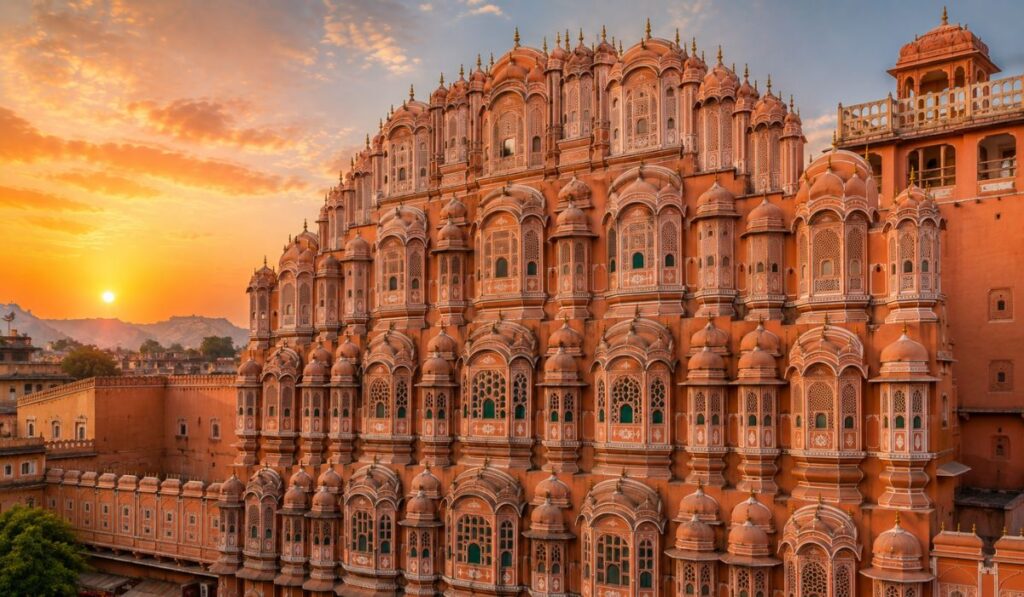
Why visit then: Amber Fort, Hawa Mahal, and City Palace are comfortable to explore.
Weather: 10–27°C in winter; 33–42°C in summer.
Major attractions: Amber Fort, City Palace, Hawa Mahal, Jantar Mantar, Nahargarh Fort.
Udaipur (The City of Lakes)
Best months: September–March. September offers post-monsoon greenery and full lakes with fewer crowds. October–November is peak romance — Lake Pichola at its most beautiful.
Why visit then: Lakes are full, hills green, palace views spectacular.
Weather: 14–30°C in winter.
Major attractions: City Palace, Lake Pichola, Jag Mandir, Fateh Sagar Lake, Monsoon Palace.
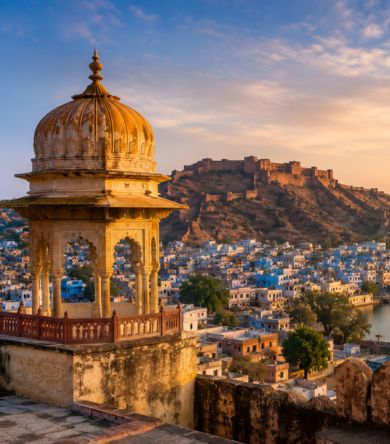
Jodhpur (The Blue City)
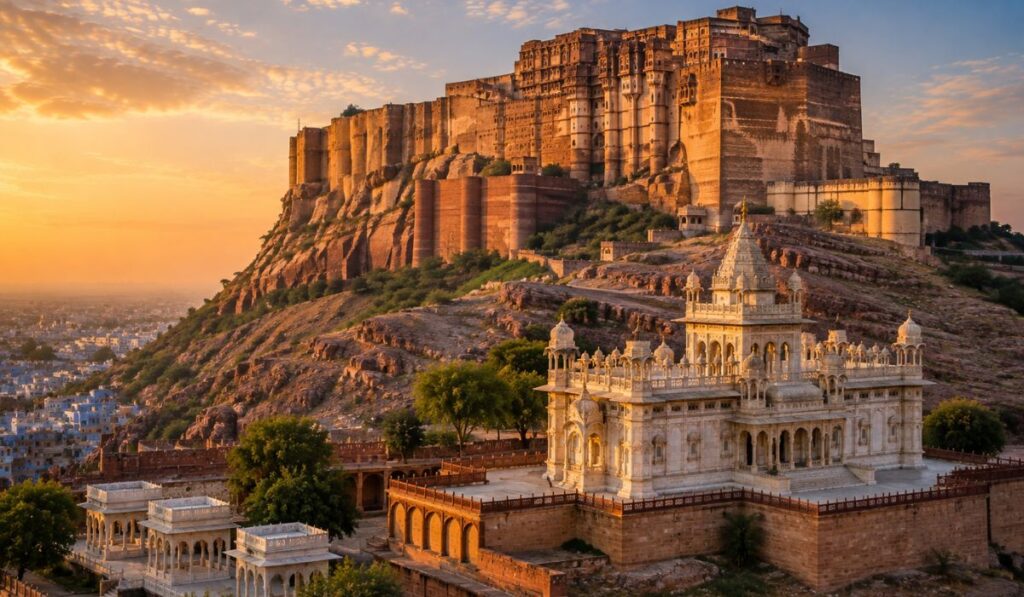
Best months: October–March. Mehrangarh Fort is walkable in winter; ramparts become an oven by 10 AM in summer.
Why visit then: Blue City is comfortable to explore, fort views spectacular.
Weather: 10–27°C in winter.
Major attractions: Mehrangarh Fort, Jaswant Thada, Umaid Bhawan Palace, Clock Tower Market.
Jaisalmer (The Golden City)
Best months: November–February. Jaisalmer Fort glows golden in winter light. December–January are peak for desert camping under clear cold skies.
Why visit then: Desert temperatures are bearable, camping magical.
Weather: 5–23°C in winter; can hit 50°C in summer.
Major attractions: Jaisalmer Fort (Sonar Quila), Patwon Ki Haveli, Sam Sand Dunes, Gadisar Lake.
Pushkar
Best months: November (for the Pushkar Camel Fair); October–March for general sightseeing.
Why visit then: The fair is Rajasthan’s most famous festival.
Weather: 12–28°C in November.
Major attractions: Pushkar Lake, Brahma Temple, camel fair grounds, local markets.
Bikaner
Best months: October–March. The desert city is comfortable in winter; camel safari weather is ideal.
Why visit then: Junagarh Fort and Karni Mata temple comfortable all day.
Weather: 5–25°C in winter.
Major attractions: Junagarh Fort, Karni Mata Temple (rat temple), camel breeding farm.
Mount Abu (Rajasthan’s Only Hill Station)
Best months: October–March. September is also excellent for post-monsoon greenery and flowing waterfalls.
Why visit then: Pleasant temperatures, Dilwara Temples comfortable, Nakki Lake calm.
Weather: 10–26°C in winter.
Major attractions: Dilwara Temples, Nakki Lake, Sunset Point, Guru Shikhar.
Ranthambore National Park
Best months: October–June (park open). Best for tiger sightings: April–June when animals gather at water sources. Best for comfort: November–February (pleasant weather).
Why visit then: Tiger sightings peak in summer; comfort peaks in winter.
Weather: Varies by season.
Major attractions: Tiger safaris, Ranthambore Fort, Padam Talao.
Chittorgarh
Best months: October–March. The massive fort covers 700 acres and requires comfortable weather for exploration.
Why visit then: Fort exploration is manageable in cool weather.
Weather: 12–30°C in winter.
Major attractions: Chittorgarh Fort, Vijay Stambh, Kirti Stambh, Padmini Palace.
Kumbhalgarh
Best months: November–February. The fort wall walk and light show are best in clear, cool weather.
Why visit then: Ideal 12–28°C range, clear skies.
Weather: 12–28°C in winter.
Major attractions: Kumbhalgarh Fort (world’s second-longest wall), Badal Mahal.
Rajasthan Festivals Calendar
| Festival | 2026 Date | Location | Why Visit | Travel Tips |
|---|---|---|---|---|
| Desert Festival | Jan 30 – Feb 1 | Jaisalmer | Folk performances, camel races, turban-tying competitions | Book accommodation months ahead |
| Jaipur Literature Festival | January | Jaipur | World’s largest free literary festival | Arrive early for sessions |
| Gangaur Fair | March 21–22 | Jaipur | Colorful processions celebrating spring | Great for photography |
| Holi (Dhulandi) | March 3 | Statewide | The festival of colors — Jaipur and Jodhpur celebrations are world-famous | Wear old clothes, protect cameras |
| Braj Holi | March 26–27 | Bharatpur | Traditional Holi celebrations | More authentic than city celebrations |
| Teej Festival | July–August | Statewide | Monsoon festival, swinging processions | Best in Jaipur |
| Independence Day | August 15 | Statewide | National celebrations | Major monuments illuminated |
| Diwali | October–November | Statewide | Festival of lights — decorations, fireworks | Book accommodation well ahead |
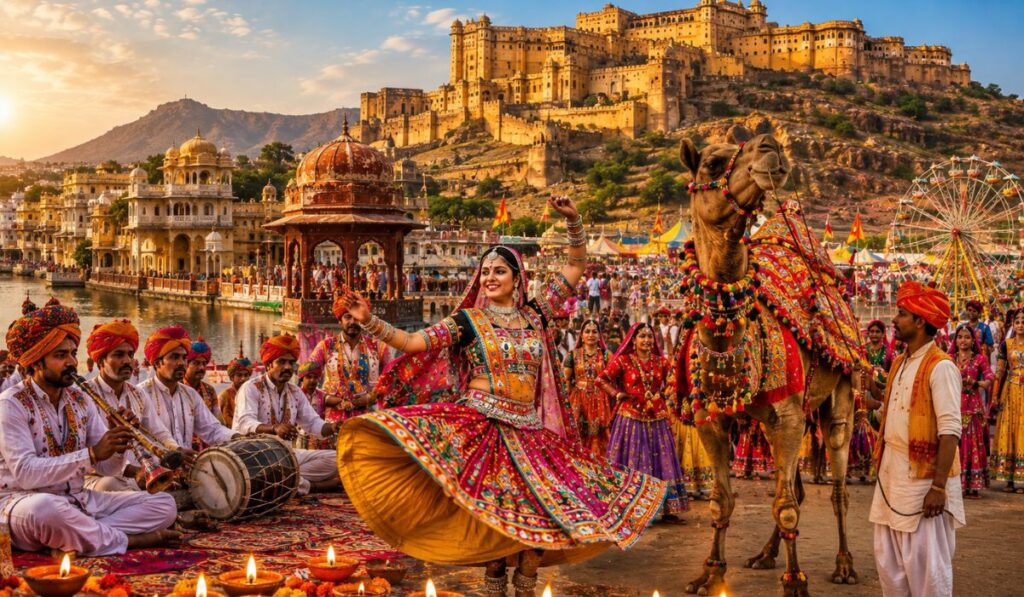
| Pushkar Camel Fair | November 22–23 | Pushkar | Rajasthan’s most famous fair — camel trading, folk music, cultural performances | Book 6 months ahead — hotels fill up |
Best Time for Popular Activities
| Activity | Best Months | Why |
|---|---|---|
| Camel Safari | November–February | Cool days, cold clear nights; perfect for desert camping |
| Desert Camping | November–February | Clear skies, comfortable temperatures |
| Tiger Safari (Ranthambore) | April–June | Animals gather at water sources; sightings peak |
| Palace Tours | October–March | Comfortable temperatures for extended walking |
| Heritage Walks | November–February | Cool weather, clear skies |
| Boat Ride in Udaipur | September–March | Lakes are full and beautiful |
| Hot Air Balloon | November–February | Clear skies, minimal wind |
| Photography | September–October (green desert), November–February (crisp winter light) | Unique conditions in each season |
| Shopping | Year-round | Covered bazaars operate in all weather; winter is more comfortable |
| Cultural Shows | Year-round | Indoor performances unaffected by weather |
Which Month Should You Visit? (Decision Guide)
| If you want… | Choose… |
|---|---|
| Pleasant weather | November or February |
| Green landscapes | September (monsoon retreat, desert briefly green) |
| Luxury vacation | December–January (heritage hotels at their finest) |
| Budget trip | July–September (lowest prices) or April–June (heat) |
| Romantic honeymoon | October (post-monsoon greenery, full lakes, quieter palaces) |
| Family vacation | November–February (comfortable, kid-friendly) |
| Photography | September–October (dramatic skies, green desert) or November–February (crisp light) |
| Festivals | March (Holi), November (Pushkar Fair), January–February (Desert Festival) |
| Wildlife | April–June (tiger sightings peak in Ranthambore) |
| Desert experience | November–February (cool days, clear nights) |
Rajasthan Crowd Calendar
| Month | Tourist Crowds | Hotel Availability | Attraction Wait Time |
|---|---|---|---|
| January | Peak | Limited | Long queues |
| February | High | Moderate | Moderate queues |
| March | Moderate | Good | Short queues |
| April | Low | Excellent | No queues |
| May | Very low | Excellent | No queues |
| June | Very low | Excellent | No queues |
| July | Low | Excellent | No queues |
| August | Low | Excellent | No queues |
| September | Low–Moderate | Good | Short queues |
| October | Rising | Good | Short queues |
| November | Peak begins | Limited | Moderate queues |
| December | Peak | Very limited | Long queues |
The most crowded months are October to March, with special peaks during Diwali, Pushkar Fair, Christmas, and New Year.
Rajasthan Hotel Prices by Season
Peak Season (December–January): Highest prices. Heritage hotels book out months in advance. Expect to pay 2–3x off-season rates.
Shoulder Season (October, March): Good value. Rates are lower than peak, weather is still comfortable.
Off Season (April–September): Lowest prices. Hotels drop rates up to 70%. September offers the best value — monsoon retreats, greenery remains, prices still low.
Money-saving tips:
- Book 3–6 months ahead for peak season
- Travel in September for the best value-to-weather ratio
- Consider heritage havelis instead of 5-star palaces
- Book directly with hotels or through local tour operators
Cheapest Time to Visit Rajasthan
The cheapest time to visit Rajasthan is July–September (monsoon season) and April–June (summer heat).
| Cost Category | Peak Season (Dec–Jan) | Off Season (Jul–Sep) |
|---|---|---|
| Flights | Highest | 30–50% lower |
| Hotels | Highest | 50–70% lower |
| Tour prices | Highest | 20–40% lower |
| Taxi/Driver | Highest | Negotiable |
Best value month: September. Monsoon retreats, the desert turns briefly green, tourist facilities reopen, and prices haven’t yet risen to peak season levels.
For travelers comparing value, our Rajasthan Tour Packages offer competitive rates across all seasons.
Sample Rajasthan Itineraries by Season
5 Days (Winter Recommended)
Delhi → Jaipur (2 days) → Agra (Taj Mahal) → Delhi. Best in November–February.
7 Days
Delhi → Jaipur (2 days) → Jodhpur (2 days) → Udaipur (2 days) → Delhi. Best in October–March.
10 Days
Recommended: Delhi → Agra (Taj Mahal) → Jaipur → Jodhpur → Udaipur → Delhi. This itinerary covers the Golden Triangle plus Rajasthan’s two most iconic cities.
For first-time visitors wanting a broader North India experience, explore our Delhi Agra Jaipur Jodhpur Udaipur Tour (10 Days). This tour covers major destinations and is perfect for first-time travelers.
13 Days
Recommended: Delhi → Agra → Jaipur → Bikaner → Jaisalmer → Jodhpur → Udaipur → Delhi. This is the complete Rajasthan circuit.
For travelers wanting an in-depth journey covering Rajasthan’s major heritage cities, our Ultimate Classical Rajasthan Tour (13 Days) takes you through Delhi, Agra, Jaipur, Bikaner, Jaisalmer, Jodhpur, and Udaipur. It’s ideal for those who want to experience Rajasthan’s full cultural and historical richness.
Common Mistakes Travelers Make
Visiting Jaisalmer in May: Jaisalmer can hit 50°C in May. Fort sandstone burns bare feet. This isn’t discomfort — it’s dangerous.
Underestimating winter nights: Desert nights in December–January can drop to near-freezing (5–8°C). Pack warm layers even if you’re from a cold climate.
Booking late during peak season: December–January hotels book out months in advance. Book at least 3–6 months ahead.
Ignoring festival dates: Arriving during Pushkar Fair without a hotel booked is a disaster. Check the festival calendar before booking.
Packing incorrect clothing: Summer requires lightweight cotton and sun protection. Winter requires layers, jackets, and warm accessories. Don’t pack for one season only.
Not factoring in travel times: Rajasthan is a large state — distances between cities can be 3–6 hours. Plan accordingly.
Assuming all Rajasthan is the same temperature: Desert cities like Jaisalmer and Bikaner run hotter by day and colder by night than Jaipur.
Local Travel Tips
Clothing:
- Winter (Oct–Mar): Layers are essential. Light cotton for days, warm jacket, scarf, and gloves for nights
- Summer (Apr–Jun): Lightweight, light-colored cotton and linen. Wide-brim hat, sunscreen, sunglasses
- Monsoon (Jul–Sep): Rain jacket, waterproof shoes, quick-dry clothing
- General: Modest clothing is appreciated — loose cotton kurtas, linen shirts, and trousers work best
Hydration: Carry water bottles everywhere. In summer, dehydration is a serious risk. Add electrolyte powders to your water.
Transport: Private AC cars are the most comfortable way to travel between cities. Book through reputable operators.
Desert etiquette: Respect local customs. Ask permission before photographing people. Dress modestly in rural areas.
Festival planning: Book accommodation 3–6 months ahead for major festivals like Pushkar Fair and Desert Festival.
Photography tips:
- Sunrise and sunset offer the best light for forts and palaces
- The Taj Mahal and Amber Fort are best photographed in early morning light
- During monsoon, dramatic skies create unique photo opportunities
- Ask permission before photographing locals
Sunrise vs sunset visits: In summer, sightsee at sunrise and sunset only. In winter, all-day sightseeing is comfortable.
Expert Recommendations
| Travel Goal | Best Month | Why |
|---|---|---|
| Honeymoon | October | Post-monsoon greenery, full lakes, quieter palaces |
| Family | December | Cool weather, festive atmosphere, clear skies |
| Luxury | January | Heritage hotels at their finest, perfect weather |
| Budget | August | Lowest prices, lush landscapes |
| Wildlife | April | Tiger sightings peak in Ranthambore |
| Photography | September | Desert turns green, dramatic monsoon skies |
| Festivals | November | Pushkar Camel Fair — Rajasthan’s most famous event |
| Desert Safari | February | Cool days, clear nights, ideal camping |
| First-time visit | November | Best weather, manageable crowds |
| Value + Weather | October/February | Shoulder season — lower prices, good weather |
FAQs – Best Time to Visit Rajasthan
What is the best month to visit Rajasthan?
November is the best month to visit Rajasthan — it offers ideal weather (28°C days, 13°C nights), clear skies, the Pushkar Camel Fair, and manageable crowds before December’s peak. February is a close second.
Is Rajasthan too hot in summer?
Yes — summer (April–June) in Rajasthan is extreme, with temperatures regularly exceeding 45°C (113°F) in desert areas. Jaisalmer can hit 50°C. Heatstroke is a real risk. Only budget travelers or wildlife enthusiasts should consider summer visits.
Can I visit Rajasthan during monsoon?
Yes — monsoon (July–September) offers a different Rajasthan. The desert turns briefly green, Udaipur’s lakes fill, and prices are low. However, humidity rises and occasional flooding can disrupt travel. September is the best monsoon month.
Is December the best month?
December offers the coolest weather (23°C days / 8°C nights) and clear blue skies, but it’s also the busiest and most expensive month. November and February offer similar weather with fewer crowds and lower prices.
How many days are enough for Rajasthan?
10–13 days are ideal for a comprehensive Rajasthan tour covering major cities. 7 days covers the highlights (Jaipur, Jodhpur, Udaipur). 5 days covers the Golden Triangle (Delhi, Agra, Jaipur).
Which city is coolest in Rajasthan?
Mount Abu, Rajasthan’s only hill station, is the coolest city year-round. Among major cities, Udaipur and Jaipur are slightly cooler than Jaisalmer and Bikaner due to their inland locations.
Is Rajasthan expensive in winter?
Yes — winter (December–January) is peak season with the highest prices. Hotels can cost 2–3x off-season rates. Book 3–6 months ahead. Shoulder months (October, February, March) offer better value.
What clothes should I pack for Rajasthan?
Winter (Oct–Mar): Layers — light cotton for days, warm jacket, scarf, gloves for cold desert nights.
Summer (Apr–Jun): Lightweight, light-colored cotton and linen, wide-brim hat, sunscreen.
Monsoon (Jul–Sep): Rain jacket, waterproof shoes, quick-dry clothing.
Which month has the fewest crowds?
May–June have the fewest crowds (extreme heat). July–September also have low crowds (monsoon). For fewer crowds with better weather, choose October or March — shoulder season with manageable crowds.
Is Rajasthan good for a honeymoon?
Yes — Rajasthan is excellent for honeymoons. October is the best month — post-monsoon greenery, full lakes (Udaipur’s Lake Pichola at its most beautiful), and palaces quieter than any other dry-season month. November–February are also romantic with cool weather and clear skies.
Conclusion – Best Time to Visit Rajasthan
Rajasthan is one of the world’s most extraordinary destinations — a land of maharajas, mighty forts, golden deserts, and palaces that defy imagination. But choosing the best time to visit Rajasthan is the single most important decision you’ll make.
The short answer: October to March offers the best weather. November and February are the sweet spots — ideal conditions with manageable crowds. December–January are perfect but crowded and expensive. April–June are brutally hot — only for budget travelers or wildlife enthusiasts. July–September offer green landscapes and low prices but come with humidity and rain.
The real answer: The best time depends on you. Ask yourself:
- Do you want perfect weather? → November or February
- Are you on a tight budget? → July–September
- Do you want to experience festivals? → March (Holi) or November (Pushkar Fair)
- Are you a photographer? → September–October or November–February
- Are you traveling with family? → November–February
- Is this a honeymoon? → October
Whatever you choose, Rajasthan will reward you with unforgettable experiences. The forts will still be magnificent. The deserts will still be magical. The food will still be extraordinary. The people will still welcome you with warmth.
Ready to plan your Rajasthan adventure? Explore our Rajasthan Tour Packages for expertly crafted itineraries.
For an immersive heritage journey covering Rajasthan’s major cities, consider our Ultimate Classical Rajasthan Tour (13 Days) — the complete Rajasthan experience.
