
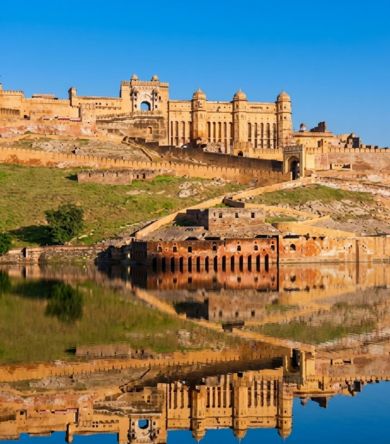
Rajasthan does not simply welcome visitors — it transports them. One moment you’re watching the sun set behind a 15th-century fort wall, and the next you’re sipping masala chai in a desert camp while a folk musician tunes his kamaicha under the stars. Few places on earth pack this much royal history, colour, and raw landscape into a single region.
But here’s the honest truth: Rajasthan is big. It’s roughly the size of Germany, dotted with cities that each deserve their own chapter, and it rewards travellers who plan ahead far more than those who wing it. That’s exactly why so many first-time visitors search for guidance on how to plan a Rajasthan trip before they book a single hotel.
This guide walks you through everything — when to go, how many days you need, which cities matter most, what it costs, how to get around, and how to build an itinerary that actually fits your travel style, whether you’re backpacking solo, honeymooning, travelling with kids, or booking a fully custom Rajasthan Tour Packages experience with a private guide and driver.
By the end, you’ll have a clear, practical framework for how to plan your Rajasthan tour with confidence — no guesswork required.
Why plan your Rajasthan tour?
Rajasthan is often called the “Land of Kings,” and the name isn’t just marketing. This is a region shaped by centuries of Rajput dynasties, and that history is still visible everywhere you look.
Here’s what draws travellers back again and again:
- Royal history and architecture — hilltop forts, ornate palaces, and havelis that once housed maharajas
- UNESCO World Heritage Sites — including the hill forts of Rajasthan and the astronomical Jantar Mantar
- Lakes and desert landscapes — from the serene waters of Udaipur to the golden dunes near Jaisalmer
- Wildlife — tiger safaris in Ranthambore National Park draw nature lovers from across the globe
- Vibrant culture — folk dance, puppet shows, and live Rajasthani music appear in courtyards and rooftop restaurants alike
- Festivals — Pushkar Camel Fair, Jaipur Literature Festival, and Teej celebrations bring the streets to life
- Shopping — block-printed textiles, blue pottery, leather juttis, and precious stones
- Local cuisine — dal baati churma, laal maas, and ghewar are just the beginning
- Luxury experiences — heritage palace hotels that rank among the finest in the world
Whatever kind of traveller you are, Rajasthan has a version of the trip that’s built for you.
Best Time to plan your Rajasthan tour
Timing shapes almost every other decision in your trip, so it’s worth understanding the three broad seasons before you start building your Rajasthan itinerary.
October to March (Peak Season)
This is the most comfortable window for exploring Rajasthan. Days are warm and pleasant, nights turn cool (especially in the desert), and visibility is excellent for photography. It’s also festival season, with Pushkar’s camel fair and winter cultural events drawing large crowds. Expect higher hotel rates and busier forts, particularly around Christmas, New Year, and Republic Day.
April to June (Summer)
Temperatures climb sharply, often exceeding 40°C (104°F) in cities like Jaisalmer and Bikaner. This isn’t the ideal stretch for outdoor sightseeing, but it does mean lower hotel prices and thinner crowds at major monuments. Early morning fort visits and evening desert excursions help you avoid the harshest heat.
July to September (Monsoon)
Monsoon transforms the desert state in unexpected ways — lakes fill up, hillsides turn green, and the light after rainfall is spectacular for photography. Humidity rises and occasional heavy showers can disrupt outdoor plans, but this is also when you’ll find some of the best off-season hotel rates and near-empty palaces.
Quick takeaway: if flexibility allows, October through March remains the gold standard for a first Rajasthan trip, particularly if wildlife spotting in Ranthambore is on your list.
Decide How Many Days You Need
One of the first questions in any Rajasthan trip planning process is simply: how long should this trip be? Here’s a realistic breakdown.
3 Days: Enough for Jaipur alone — Amber Fort, City Palace, Hawa Mahal, and a bazaar visit. Good for a short stopover from Delhi.
5 Days: Covers the “Golden Triangle extension” — Jaipur and Pushkar or Jaipur and Udaipur, with time to actually absorb each city rather than rush through it.
7 Days: A well-rounded introduction — Jaipur, Pushkar, Jodhpur, and Udaipur, hitting forts, lakes, and desert culture without feeling rushed.
10 Days: Adds Jaisalmer and its dunes into the mix, giving you the classic western Rajasthan loop most first-time visitors dream about.
14 Days: The complete Rajasthan itinerary — Jaipur, Pushkar, Jodhpur, Jaisalmer, Udaipur, and either Mount Abu or Ranthambore, with breathing room built in for slower travel days and spontaneous detours.
There’s no universally “right” number — it depends on your pace, budget, and whether wildlife or hill-station time is a priority.
Choose the Best Rajasthan Route
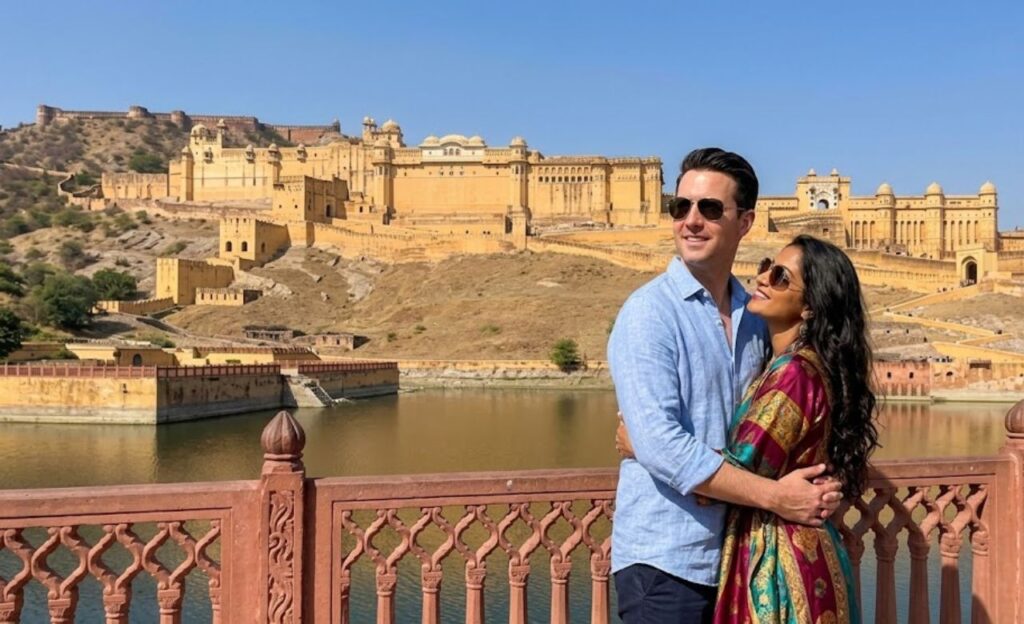
Once you know how many days you have, the next step in how to plan your Rajasthan tour is mapping a logical route so you’re not backtracking across the state.
Classic first-timer route (7–10 days): Delhi → Jaipur → Pushkar → Jodhpur → Jaisalmer → Udaipur → Delhi (fly out) or Udaipur → Mumbai
Luxury heritage route (10–14 days): Delhi → Jaipur (palace hotel) → Ranthambore (safari lodge) → Udaipur (lake-facing palace) → Jodhpur (fort-view heritage property) → Jaisalmer (desert camp) → Delhi
Both routes work well by road, and many travellers find that a chauffeur-driven car makes the whole loop far smoother than juggling flights and trains between cities.
Which Rajasthan Cities Should You Visit?
Jaipur
The Pink City is where most Rajasthan trips begin. Why visit: it’s the gateway city with the best flight and train connections, plus three UNESCO-listed sites in one place. Top attractions: Amber Fort, Hawa Mahal, City Palace, Jal Mahal. Ideal stay: 2–3 days. Best experience: an early-morning elephant or jeep ride up to Amber Fort before the tour groups arrive.
Udaipur
Known as the “City of Lakes,” Udaipur is Rajasthan’s most romantic stop. Why visit: stunning lake views, boutique heritage hotels, and a relaxed pace after busier cities. Top attractions: Lake Pichola, City Palace Udaipur, Jagdish Temple. Ideal stay: 2 days. Best experience: a sunset boat ride on Lake Pichola facing the Taj Lake Palace.
Jodhpur
The “Blue City” sits beneath the imposing Mehrangarh Fort. Why visit: dramatic fort architecture and an atmospheric old-city maze of blue-washed lanes. Top attractions: Mehrangarh Fort, Umaid Bhawan Palace, Jaswant Thada. Ideal stay: 2 days. Best experience: watching the sun set over the blue city from the fort ramparts.
Jaisalmer
A living sandstone fort city on the edge of the Thar Desert. Why visit: it’s the closest major city to genuine desert experiences. Top attractions: Jaisalmer Fort, Patwon Ki Haveli, Sam Sand Dunes. Ideal stay: 2 days. Best experience: a camel safari at sunset followed by an overnight desert camp under a clear sky.
Pushkar
A small, sacred lake town with an entirely different rhythm from the bigger cities. Why visit: it’s spiritually significant and famous for its annual camel fair. Top attractions: Pushkar Lake, Brahma Temple, the bustling bazaar. Ideal stay: 1 day. Best experience: visiting at sunrise for the ghats before the town wakes up.
Mount Abu
Rajasthan’s only hill station, and a cool escape from the desert heat. Why visit: greenery, lakes, and the intricately carved Dilwara Jain Temples. Top attractions: Nakki Lake, Dilwara Temples, Guru Shikhar viewpoint. Ideal stay: 1–2 days. Best experience: a sunset viewpoint drive with panoramic Aravalli views.
Ranthambore
One of India’s best tiger reserves, easily added to an eastern Rajasthan route. Why visit: genuine wildlife encounters in a former royal hunting ground. Top attractions: Ranthambore National Park, Ranthambore Fort. Ideal stay: 2 days (for two safari attempts). Best experience: an early-morning jeep safari with a naturalist guide.
Budget Planning
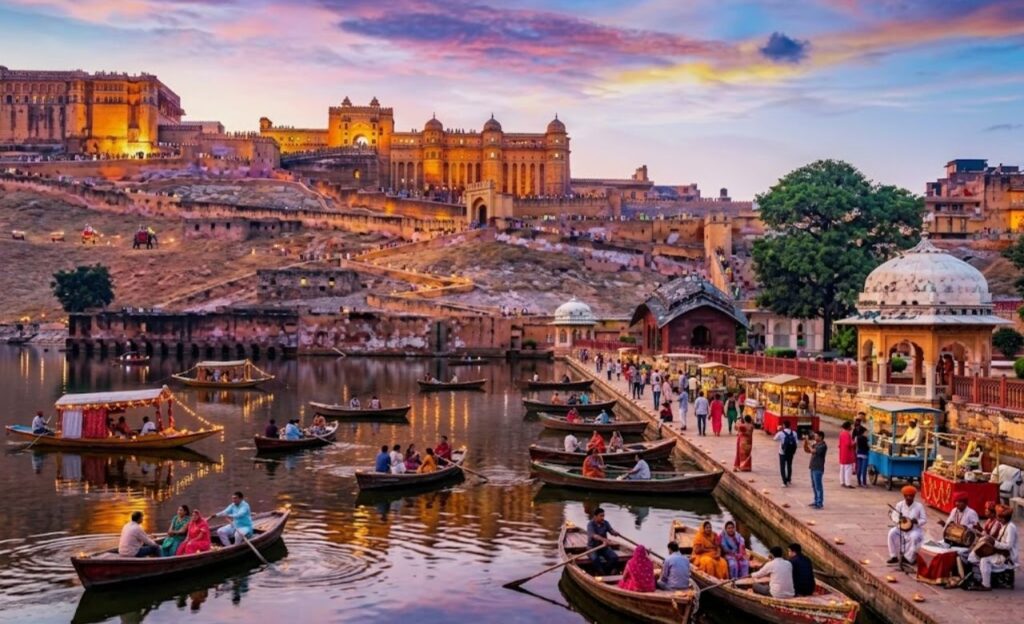
Rajasthan can flex to almost any budget, which is part of why it works so well for such a wide range of travellers.
Budget travellers (approx. $30–50/day): guesthouses and budget hotels, local thalis and street food, shared transport or state buses, standard monument entry fees, modest souvenir shopping.
Mid-range travellers (approx. $80–150/day): three- and four-star hotels or boutique heritage stays, a mix of local and multi-cuisine restaurants, private car or driver for city-to-city travel, a few paid experiences like a camel safari or cooking class.
Luxury travellers (approx. $250+/day): palace hotels and five-star heritage properties, private guided tours and fine dining, a dedicated chauffeur-driven vehicle for the entire trip, exclusive experiences such as private folk performances or hot air balloon rides.
Whatever tier you fall into, transport and accommodation will be your two biggest line items — and both are where a bit of upfront Rajasthan travel planning pays off the most.
Best Ways to Travel Around Rajasthan
There isn’t one “correct” way to move between cities — it depends on your time, comfort needs, and how many stops you’re making.
- Flights: Fastest between Delhi, Jaipur, Udaipur, and Jodhpur, but limited routes between smaller towns.
- Trains: Scenic and often comfortable on major routes, though schedules can be limited and stations sit outside town centres.
- Buses: Budget-friendly and frequent, but long travel times and variable comfort levels.
- Self-drive: Technically possible, but Indian traffic patterns and unfamiliar roads make this genuinely challenging for first-time visitors.
- Private taxi: Point-to-point convenience without a long-term commitment to one driver.
- Chauffeur-driven car: The most popular option among international travellers doing a multi-city Rajasthan road trip itinerary.
This is where hiring a Private Driver in India genuinely changes the experience. Instead of coordinating flights, train tickets, and station transfers between five or six cities, you have one vehicle and one experienced driver for the entire trip. That means flexible stops at roadside forts you didn’t plan for, no lost time at ticket counters, and a driver who already knows which route avoids traffic bottlenecks. For families juggling luggage and kids, couples wanting privacy, or senior travellers who’d rather not navigate train platforms, it’s often the single decision that makes a Rajasthan itinerary feel relaxed instead of rushed.
Where to Stay
- Luxury Hotels: Five-star international brands and iconic properties like the Taj and Oberoi group hotels, offering spa facilities, fine dining, and polished service.
- Heritage Hotels: Converted forts, havelis, and royal residences — sleeping in a genuine piece of Rajasthan’s history.
- Boutique Hotels: Smaller, design-forward properties with personalised service, popular with couples and solo travellers.
- Budget Hotels: Clean, simple guesthouses and mid-range chains, ideal for travellers prioritising value over frills.
Booking heritage or palace hotels well in advance is worth it, especially in Udaipur and Jodhpur, since the most atmospheric rooms sell out quickly in peak season.
Must-Visit Attractions
- Amber Fort (Jaipur) — hilltop fort with mirrored halls and sweeping valley views
- Hawa Mahal (Jaipur) — the honeycomb-fronted “Palace of Winds”
- Jal Mahal (Jaipur) — a palace that appears to float on Man Sagar Lake
- City Palace Jaipur — still partly home to Jaipur’s royal family
- Mehrangarh Fort (Jodhpur) — one of India’s largest and best-preserved forts
- Umaid Bhawan Palace (Jodhpur) — part royal residence, part heritage hotel
- Lake Pichola (Udaipur) — the scenic heart of the city
- City Palace Udaipur — a sprawling complex overlooking the lake
- Jaisalmer Fort — a living fort with shops, homes, and hotels inside its walls
- Sam Sand Dunes — classic Thar Desert scenery near Jaisalmer
- Chittorgarh Fort — one of India’s largest fort complexes, rich in Rajput legend
- Kumbhalgarh Fort — famous for its massive perimeter wall
- Ranthambore National Park — tiger territory inside a former royal reserve
Unique Experiences
- Camel Safari across the dunes near Jaisalmer or Bikaner
- Desert Camping under the stars with folk music around a bonfire
- Palace Stay in a converted royal residence for at least one night
- Village Tour to see rural Rajasthani life and traditional crafts
- Cooking Class learning to make dal baati churma or laal maas
- Folk Dance performances featuring Kalbelia or Ghoomar styles
- Hot Air Balloon ride over Jaipur or Pushkar at sunrise
- Jeep Safari through Ranthambore’s tiger habitat
- Shopping for block-print textiles, gemstones, and handicrafts
- Food Tour sampling street food in Jaipur’s old city
Packing Checklist
October–March: layered clothing, a light jacket for cool desert nights, comfortable walking shoes, sunglasses, and a scarf or shawl for temple visits.
April–June: breathable cotton clothing, a wide-brim hat, high-SPF sunscreen, a reusable water bottle, and electrolyte sachets.
July–September: a lightweight rain jacket, quick-dry clothing, waterproof footwear covers, and a dry bag for electronics.
Year-round essentials: modest clothing for temples and forts, a universal power adapter, a basic first-aid kit, and copies of important documents.
Safety Tips
- Women travellers: Rajasthan is generally welcoming, but dressing modestly and avoiding isolated areas after dark is sensible practice, as it would be anywhere.
- Money: carry a mix of cash and cards; UPI-based digital payments are widely used locally, though international visitors typically rely on cash and cards.
- SIM card: a local prepaid SIM or eSIM makes navigation and communication far easier throughout the trip.
- Local customs: dress modestly at religious sites, ask before photographing people, and remove shoes where required.
- Health: drink bottled or filtered water, carry basic medication, and consider travel insurance with medical coverage.
- Emergency contacts: save local emergency numbers and your hotel’s contact details before heading out each day.
- Scams to avoid: overly persistent “guides” near major forts, inflated “commission” shopping tours, and unlicensed taxi touts at stations.
Sample Rajasthan Itineraries
5 Days: Jaipur (2 nights) → Pushkar (1 night) → Jaipur departure or onward to Udaipur by flight.
7 Days: Jaipur (2 nights) → Pushkar (1 night) → Jodhpur (2 nights) → Udaipur (2 nights).
10 Days: Jaipur (2 nights) → Pushkar (1 night) → Jodhpur (2 nights) → Jaisalmer (2 nights) → Udaipur (3 nights).
14 Days: Jaipur (2 nights) → Ranthambore (2 nights) → Pushkar (1 night) → Jodhpur (2 nights) → Jaisalmer (2 nights) → Udaipur (3 nights) → Mount Abu (2 nights).
Each of these can be adapted into a Rajasthan honeymoon itinerary with more lake-facing suites and private dinners, or into a Rajasthan family tour plan with shorter driving days and kid-friendly activities built in between forts.
Why Choose a Private Driver?
By this point in your Rajasthan trip planning, one theme keeps resurfacing: logistics matter as much as sightseeing. This is exactly why so many travellers — from first-timers to seasoned luxury guests — choose a dedicated chauffeur for the entire journey.
- Flexible itinerary: stop at a roadside temple, extend time at a fort, or skip a tired afternoon without renegotiating tickets.
- Comfortable travel: air-conditioned, private vehicles instead of shared transport between long-distance stops.
- Local knowledge: experienced drivers often double as informal guides, pointing out lesser-known viewpoints and eateries.
- Photography stops: pull over whenever the light or landscape calls for it.
- Family convenience: no station transfers, no lost luggage between trains, no separate seating arrangements.
- Luxury experience: a private car pairs naturally with palace hotel stays for a seamless, high-comfort trip.
Travelling between Jaipur, Jodhpur, Udaipur, and Jaisalmer by a dedicated Rajasthan private taxi service removes nearly all the friction of multi-city travel, letting you focus on the destinations rather than the logistics between them. For travellers who’d rather have the entire route — hotels, driver, and sightseeing stops — mapped out in advance, a structured Rajasthan Tour Packages itinerary built around a private vehicle is often the simplest way to bring every piece of this guide together into one smooth trip.
FAQs – How to Plan Your Rajasthan Tour
1. How do I plan a Rajasthan tour? Start by deciding your trip length and season, then choose 3–6 cities that match your interests — history, desert, lakes, or wildlife — and arrange transport (ideally a private driver) to connect them logically.
2. How many days are enough for Rajasthan? Seven to ten days is the sweet spot for first-time visitors, covering Jaipur, Jodhpur, Udaipur, and either Pushkar or Jaisalmer without feeling rushed.
3. Is Rajasthan expensive to visit? Not necessarily — budget travellers can manage on $30–50 a day, while mid-range and luxury travellers have excellent options at every price point, including palace hotels.
4. Is Rajasthan safe for tourists? Yes, Rajasthan is one of India’s most visited states and generally safe for tourists, including solo and women travellers, provided you take standard precautions.
5. Which city in Rajasthan is best to visit? There’s no single “best” — Jaipur suits first-timers, Udaipur suits romance, Jodhpur suits fort lovers, and Jaisalmer suits desert seekers.
6. What is the best month to visit Rajasthan? November through February offers the most comfortable weather for sightseeing, festivals, and outdoor experiences.
7. Should I hire a private driver in Rajasthan? For multi-city trips, yes — a private driver saves time, adds flexibility, and removes the stress of coordinating trains, buses, or flights between towns.
8. Can Rajasthan be explored by road? Absolutely — most travellers cover the state by road, and a well-planned Rajasthan road trip itinerary with a private car is one of the most popular and comfortable ways to see it.
Conclusion – How to Plan Your Rajasthan Tour
Rajasthan rewards travellers who plan with intention. Once you’ve settled on your season, decided how many days you have, chosen your route, and figured out how you’ll travel between cities, the rest of the trip tends to fall into place naturally.
Whether you’re chasing forts and palaces, desert sunsets, tiger sightings, or simply a slower, more scenic way to see India, this guide gives you the framework for how to plan your Rajasthan tour with clarity rather than guesswork.
If you’d rather skip the spreadsheet-building and let local experts handle the routing, hotels, and driver arrangements, exploring a customised Rajasthan Tour Packages option is a practical next step — built around your dates, your pace, and the cities that matter most to you.
