
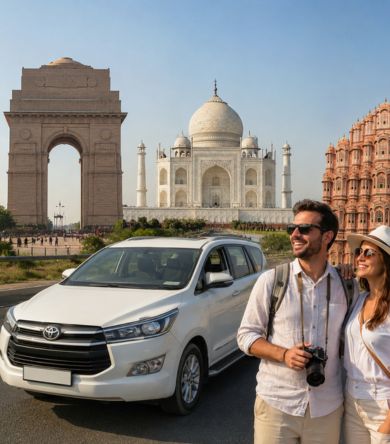
Best Time to Visit the Golden Triangle in India—this is the question every first-time traveler asks before booking their trip. The Golden Triangle is India’s most iconic travel circuit. Three cities—Delhi, Agra, and Jaipur—form a triangle on the map and a perfect introduction to the country on the ground. But here is what most visitors do not realize: when you go matters just as much as where you go.
Weather in North India swings between extremes. A summer afternoon in Agra can hit 47°C. A winter morning in Jaipur can dip below 5°C. Monsoon rains transform dusty landscapes into lush greenery but close rural roads and cloud monument views. The season you choose shapes everything—your comfort, your photographs, the crowds you fight, and the prices you pay.
This guide breaks down each season month by month so you can pick the perfect window for your trip. Whether you are planning a quick getaway or a deep cultural dive, understanding the Golden Triangle weather patterns Before visiting Golden Triangle will save you from sweat, shivers, and disappointment.
Whether you’re planning your first Golden Triangle Tour India itinerary or looking for the ideal season to visit Delhi, Agra, and Jaipur, this guide will help you choose the perfect time based on weather, festivals, crowds, and travel style.
Best Time to Visit the Golden Triangle in India
| Season | Months | Weather | Rating |
|---|---|---|---|
| Winter | October–March | Cool, dry, clear | ⭐⭐⭐⭐⭐ |
| Summer | April–June | Very hot, dry, hazy | ⭐⭐☆☆☆ |
| Monsoon | July–September | Warm, humid, rainy | ⭐⭐⭐⭐☆ |
Quick Verdict: Winter wins across almost every category. But summer and monsoon have their own advantages for specific traveler types. Read on to see which season matches your priorities.
What Is the Golden Triangle in India?
The Golden Triangle connects three of India’s most historically significant cities:
Delhi: The capital. A collision of ancient empires and modern India. You will explore Mughal forts, British-era boulevards, chaotic bazaars, and some of the best food on the subcontinent.
Agra: Home to the Taj Mahal. But also Agra Fort, Itimad-ud-Daulah, and a legacy of marble craftsmanship that continues today.
Jaipur: The Pink City. Rajasthan’s capital delivers palaces, forts, pink-hued architecture, and a desert culture distinct from the Gangetic plains.
Route Overview: The standard route runs Delhi → Agra → Jaipur → Delhi, though some travelers reverse it. Total driving distance is roughly 720–800 km depending on the exact stops.
Why It Is Popular: These three cities pack UNESCO World Heritage sites, world-class museums, vibrant markets, and architectural wonders into a compact, drivable circuit. No domestic flights needed. No complicated logistics. Just a private car and three of India’s greatest hits.
For travelers who want to go beyond the classic circuit, our 10 Days Golden Triangle Tour with Ayodhya and Varanasi adds two of India’s most spiritual cities to the journey.
Winter (October–March): The Best Season
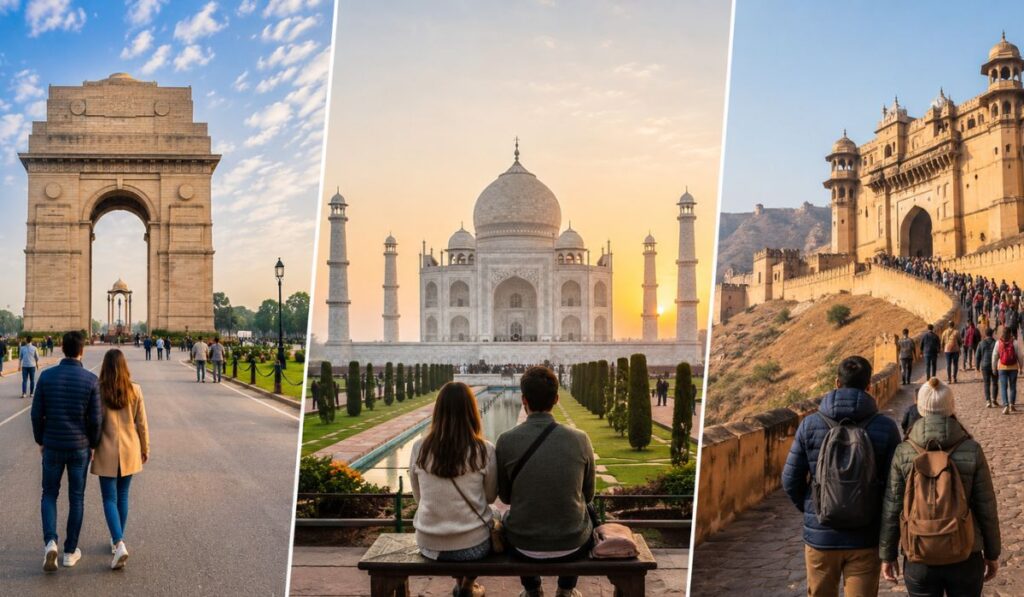
Weather
Daytime temperatures hover between 15°C and 25°C. Nights can drop to 5–10°C, especially in Delhi and Jaipur. The air is dry, the sky is blue, and visibility is at its peak. This is the best season for Golden Triangle Tour travel, hands down.
Festivals
Winter catches Diwali (October/November), Republic Day (January 26), and the Jaipur Literature Festival (January). The cultural calendar is packed.
Photography
Crisp light, minimal haze, and golden hour tones that make the Taj Mahal glow. Winter delivers the sharpest, most saturated images of the entire year.
Comfortable Sightseeing
You can walk Agra Fort without sweating through your shirt. You can explore Jaipur’s Amber Fort without seeking shade every ten minutes. The physical comfort factor is enormous.
Advantages
- Best Delhi Agra Jaipur weather combination
- Ideal for outdoor monuments and walking tours
- Peak festival season
- Cleanest air for photography
Things to Know
- This is peak tourist season. Book hotels and trains 2–3 months ahead.
- December and January mornings can be foggy, occasionally delaying trains or obscuring sunrise views.
- Prices are highest October through February.
Summer (April–June)
Pros
- Lowest prices of the year
- Fewer tourists at major monuments
- Longer daylight hours for extended sightseeing
- Mango season (May–June)
Cons
- Daytime temperatures regularly exceed 40°C
- Intense sun and UV exposure
- Heat haze reduces visibility for photography
- Physical exhaustion limits how much you can see daily
Who Should Visit
Budget travelers who can tolerate heat, or those specifically chasing lower rates. Not recommended for families with young children or senior travelers.
Travel Tips
- Schedule all outdoor sightseeing before 10:00 AM and after 4:00 PM.
- Carry electrolyte packets and drink constantly.
- Book air-conditioned transport. Non-AC travel is miserable in peak summer.
Monsoon (July–September)
Rain
Intermittent but heavy downpours. Not constant drizzle—more like dramatic afternoon thunderstorms. Roads can flood temporarily, but major highways between Delhi, Agra, and Jaipur generally stay passable.
Green Landscapes
The arid Rajasthan landscape transforms. Jaipur’s surrounding hills turn green. The Yamuna River swells. It is the most photogenic season for landscape shots, even if monument clarity suffers.
Lower Prices
Hotels drop rates 30–50% from winter peaks. You get better value for money across the board.
Photography
Overcast skies create soft, diffused light—excellent for portraits and detail shots. But the Taj Mahal may disappear behind clouds. It is a trade-off.
Pros & Cons
Table
| Pros | Cons |
|---|---|
| Lush scenery | Unpredictable rain |
| Lower prices | Humidity |
| Fewer crowds | Potential flight delays |
| Soft light | Cloudy skies at monuments |
Best Time to Visit the Golden Triangle in India – Month-by-Month Travel Guide
January: Cold mornings, clear afternoons. Possible fog delays. Excellent for photography once the sun burns through. Pack warm layers.
February: The sweet spot. Clear skies, mild temperatures, minimal fog. Arguably the best single month for the Golden Triangle.
March: Warming up. Comfortable days, pleasant evenings. Holi often falls in March—a spectacular but messy festival to experience.
April: The last decent month before heat takes over. Mornings are still manageable. Afternoons become oppressive.
May: Brutal heat. Only recommended if you have a high tolerance or are chasing extreme budget deals.
June: Pre-monsoon humidity builds. Occasional dust storms. Wait for the rains if you can.
July: Monsoon arrives. Dramatic skies, green landscapes, but unpredictable downpours. Good for experienced travelers.
August: Peak rainfall. Lush scenery, lowest crowds, best hotel deals. Risk-reward month.
September: Monsoon retreats. Clearer days return. A hidden gem month with green landscapes and thinning crowds.
October: Post-monsoon clarity. Comfortable temperatures return. Diwali often falls in October. One of the best months overall.
November: Peak season begins. Perfect weather, festival atmosphere, but book everything early.
December: Cold, atmospheric, occasionally foggy. When clear, the light is extraordinary. Pack winter clothing.
Best Time for Different Types of Travelers
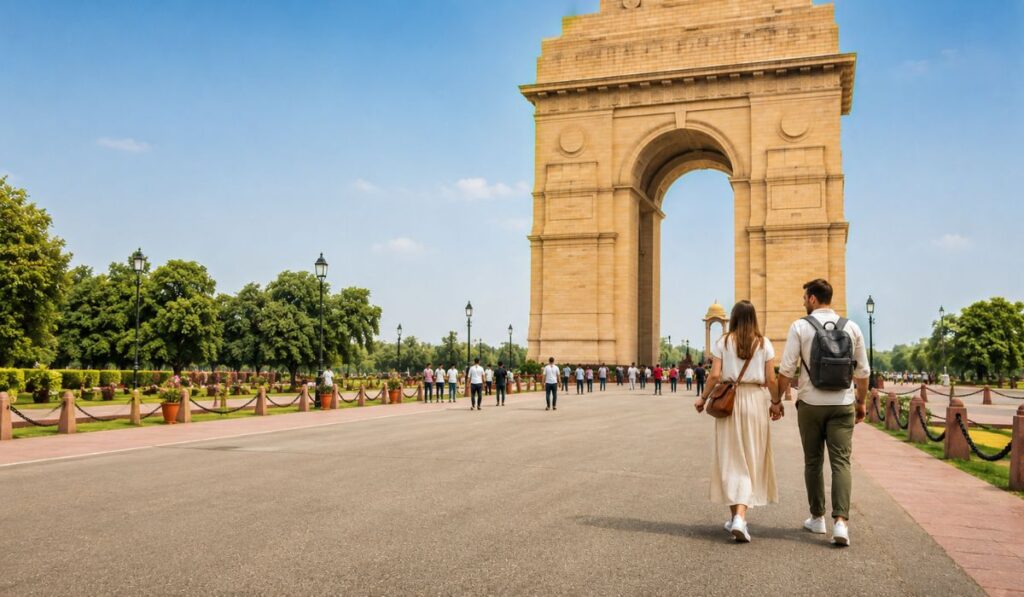
Couples: October–February. Pleasant weather for romantic walks, outdoor dining, and the Taj Mahal at sunrise. Avoid summer heat.
Families: November–February. Comfortable for children, school holiday alignment, and safe outdoor exploration.
Solo Travelers: September–October or February–March. Good weather with thinner crowds and lower accommodation costs.
Senior Travelers: November–February only. Summer heat is a genuine health risk for older travelers unaccustomed to extreme temperatures.
Luxury Travelers: October–March. Palace hotels in Jaipur and premium properties across the circuit operate at full service during peak season.
Best Time for Photography
Delhi: Winter mornings at India Gate and Humayun’s Tomb deliver soft golden light with minimal haze. Avoid summer afternoons—flat, harsh light and heat distortion.
Agra: The Taj Mahal at sunrise in November or February is the single best photography opportunity in the Golden Triangle. Summer haze kills contrast. Monsoon clouds add drama but obscure the dome.
Jaipur: Amber Fort at sunrise in winter. Hawa Mahal in late afternoon light. The pink city glows in low-angle sun.
Golden Hour: Winter golden hours are longer and cleaner. Summer golden hours are brief and hazy. Monsoon golden hours are unpredictable but occasionally spectacular.
Sunrise vs. Sunset: Sunrise wins in Agra (Taj Mahal faces east). Sunset wins in Jaipur (west-facing fort views). Delhi offers strong options for both.
Festivals Worth Planning Around
Diwali: October/November. Lights, fireworks, family atmosphere. Delhi and Jaipur are spectacular. Book months ahead.
Holi: March. The festival of colors. Joyful, chaotic, and photogenic. Wear clothes you can throw away.
Pushkar Fair: November. Near Jaipur (Ajmer district). A massive camel and livestock fair with cultural performances. Unique but crowded.
Jaipur Literature Festival: January. The world’s largest free literary festival. A different side of Rajasthan.
Republic Day: January 26. Delhi’s parade and celebrations are iconic but security is extreme and crowds are massive.
Weather Tips for Each City
Delhi: The widest temperature swing. Winter nights are cold. Summer days are scorching. Always check the specific forecast.
Agra: Slightly hotter than Delhi in summer. The Yamuna River adds humidity. Winter fog is more common here than in Jaipur.
Jaipur: The driest of the three. Desert climate means cold winter nights and very hot summer days. Monsoon is lighter than Delhi or Agra.
Packing: Layers for winter (morning cold, afternoon warm). Breathable cotton for summer. Waterproof jacket and quick-dry clothing for monsoon. Comfortable walking shoes year-round.
Suggested 3-Day Golden Triangle Itinerary
1 Day: Delhi
- Morning: India Gate, Humayun’s Tomb
- Afternoon: Qutub Minar, Lotus Temple
- Evening: Connaught Place dinner
2 Day: Agra
- Early morning: Taj Mahal at sunrise
- Mid-morning: Agra Fort
- Afternoon: Itimad-ud-Daulah (Baby Taj)
- Evening: Drive to Jaipur or overnight in Agra
3 Day: Jaipur
- Morning: Amber Fort
- Afternoon: City Palace, Jantar Mantar
- Evening: Hawa Mahal, local bazaar shopping
Travelers looking for a hassle-free experience can choose our 3 Day Golden Triangle Tour, which includes private transportation, sightseeing, and a carefully planned itinerary.
Travel Tips
Packing: Travel light but prepare for temperature swings. A warm layer for winter mornings, sun protection year-round, and rain gear for monsoon.
Clothing: Conservative dress is appreciated at religious sites. Lightweight long pants and breathable long-sleeve shirts work in all seasons.
Booking Hotels: Winter requires 2–3 month advance booking for good properties. Summer and monsoon offer last-minute deals.
Entry Tickets: Buy Taj Mahal tickets online in advance. The daily visitor cap fills quickly in peak season.
Private Driver: A private car with driver is the most efficient way to cover the circuit. It eliminates navigation stress, handles luggage, and lets you rest between cities.
FAQs – Best Time to Visit the Golden Triangle in India
Which month is best?
February and November are the single best months for weather, clarity, and manageable crowds.
Is summer too hot?
For most travelers, yes. April through June sees temperatures above 40°C regularly. Only visit in summer if you are experienced with extreme heat or are chasing deep discounts.
Is monsoon a good time?
Yes, for budget travelers and landscape photographers. Expect rain, humidity, and occasional monument closures, but enjoy lower prices and lush scenery.
How many days are enough?
Three days is the classic minimum. Four to five days allows a more relaxed pace and deeper exploration.
Which season has fewer crowds?
Summer (April–June) and monsoon (July–September). Winter is packed.
Is winter expensive?
Yes. Winter is peak season. Hotels, guides, and transport cost 30–100% more than off-season. Book early for better rates.
Final Thoughts – Best Time to Visit the Golden Triangle in India
Here is the bottom line: Winter is the best overall season to visit the Golden Triangle. The combination of cool temperatures, clear skies, festival energy, and comfortable sightseeing creates conditions that simply do not exist in other months.
Monsoon is the hidden gem for budget travelers and photographers who love dramatic skies and green landscapes. Summer suits those looking for fewer crowds and lower prices, provided they can handle extreme heat.
No matter when you go, the Golden Triangle delivers. The Taj Mahal at dawn, the forts of Jaipur at sunset, and the chaotic energy of Old Delhi are unforgettable in any season. The trick is matching your travel style to the right window—and packing accordingly.
